

Making the Invisible Visible
From the beginning of my academic life, long before coaching or ACT entered my world, I was drawn to the strange power of visual methods.
As a qualitative researcher, I often felt that human experience was too textured to be captured by words alone. People do not only think in sentences. They remember through images, move through spaces, attach meaning to objects, and carry parts of their lives in routes, rooms, gestures, and ordinary things.
Sometimes, to understand someone’s world, we need more than what they can explain directly.
We need to see what they see.
Or at least learn how to see with them.
Learning to Look
This intuition began early.
During my master’s studies in Italy, I started filming interviews and research situations, and quickly discovered how much additional meaning could appear in visual material. A pause, a gesture, a look away from the camera, the way someone moved while speaking — these were not decorations around the “real” data. They were part of the meaning.
Around that time, I also learned how to conduct autobiographical interviews. I used that method with my grandparents on my mother’s side, listening to the story of their difficult and remarkable lives in Argentina and later in Israel. That experience taught me something simple and lasting: when people are given time, space, and the right kind of attention, memory begins to unfold in layers.
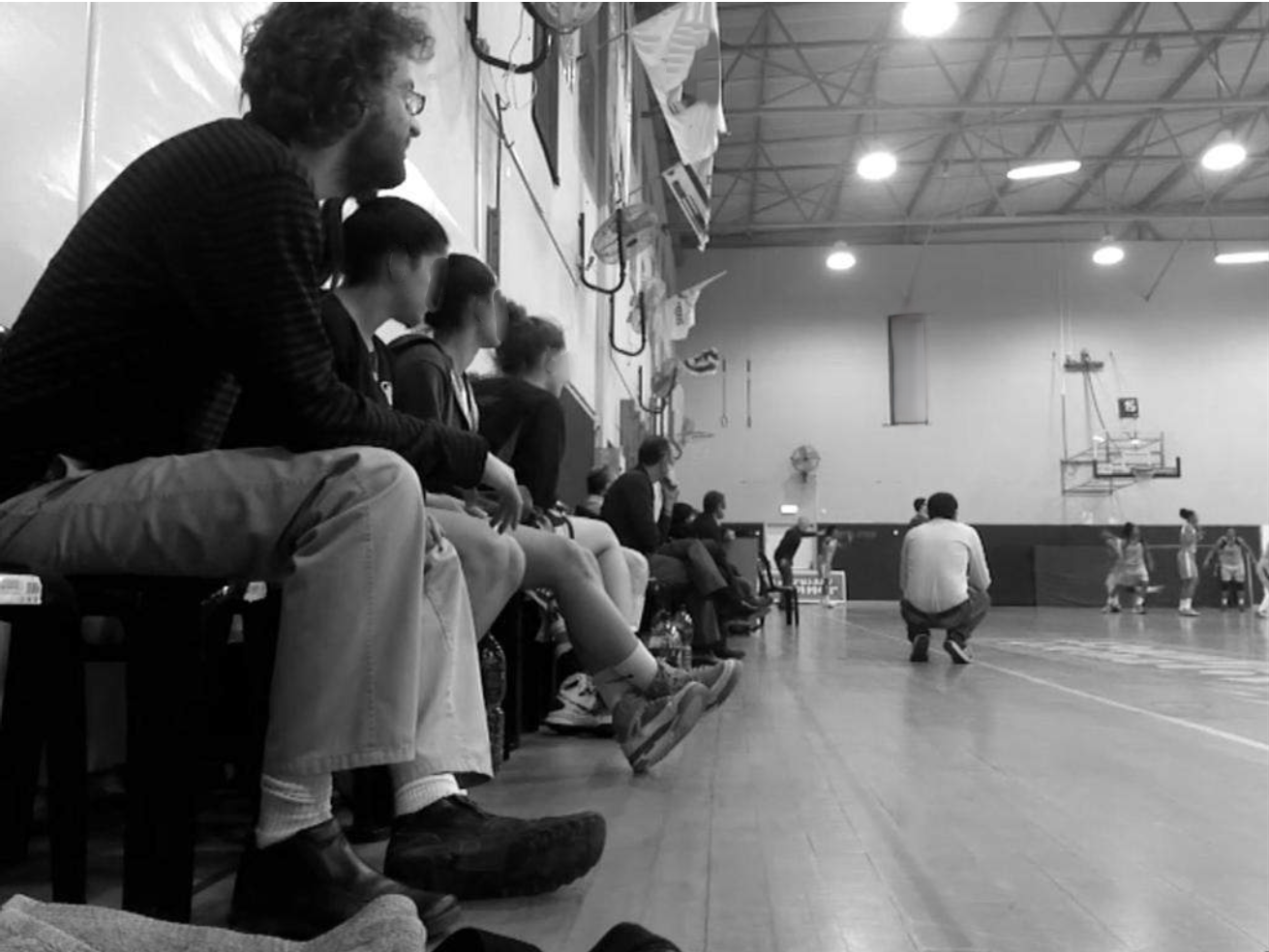
Later, in my master’s thesis at the University of Milano-Bicocca, I developed this further through an ethnographic study of women’s basketball. I read countless ethnographies, especially those that used the body, space, and thick description to make social life visible. One book that stayed with me deeply was an ethnography of boxing in Philadelphia, where the gym, the body, the city, and the discipline of the sport all became part of the story.
Those works helped me understand that visual and embodied tools were not secondary to research.
They could reveal what language alone might miss.
A Tablet, a Court, and a Moving Image
My own equipment was not impressive.
At the time, I could not afford a proper computer. By mistake, or perhaps out of necessity disguised as optimism, I bought a cheap tablet that I hoped would replace one. I wrote my entire five-hundred-page master’s thesis on it.
The same clumsy tablet also became one of my main research tools.
During basketball practices and games, I filmed what I could: movements, drills, gestures, mistakes, reactions, moments of humour, moments of tension, moments when the game seemed to say more than anyone had said out loud. When I was not moving around the court, I sometimes placed the tablet on a rotating chair and let it follow the rhythm of the players from side to side.
It was not elegant.
But it worked.
Later, I edited some of the material into a short film connected to the thesis. It included funny moments, like the coach laughing with the players about how they looked on camera; emotional moments, like winning shots, joy, and disappointment; action sequences from beautiful plays; and even moments where I appeared inside the frame, no longer only an observer but part of the strange social world I was studying.
The camera allowed me to return to the court again and again.
To slow it down.
To notice what I had missed in real time.
A pass that carried trust.
A hesitation that revealed hierarchy.
A glance exchanged after a mistake.
A shift in posture before anyone spoke.
That was one of my first lessons in visual research: images do not replace language, but they can slow reality down enough for meaning to appear.
Homes, Objects, and Emotional Geography
Years later, during my doctoral studies — also at Bicocca, this time in the International Urban Studies program — I deepened this visual approach more deliberately.
I studied Airbnb hosts who rented out their actual homes. I wanted to understand what happens to the meaning of home when it becomes partly private, partly public, and partly shaped by the expectations of strangers.
What interested me was not only the platform itself, but the subtle emotional adjustments people make when their homes become available to guests.
Hosts removed personal objects.
They rearranged furniture.
They changed routines.
They created distance from parts of their own space, sometimes slowly and without fully noticing it.
The question that stayed with me was simple:
What happens to intimacy when home must also perform?
One object appeared again and again in different forms: the sofa.
For many people, the sofa was one of the most important objects in the home. A place of rest, togetherness, television, tired evenings, family, intimacy, comfort. But because the living room was often the main space through which guests moved, the sofa could also become complicated. Hosts cared about it, protected it, worried about it, or gradually detached from it.
The most intimate object in the most public room.
That tension taught me a lot.
A home is not only a physical space. It is an emotional geography.
Drawing What Words Had Not Yet Found
In the ethnographic part of the research, I often had only one night inside each home.
I entered the apartment as a guest, slept there, noticed what I could, felt what the space allowed me to feel — and then left. The encounter was brief, but the space was full of information.
Because of that, visual material became essential.
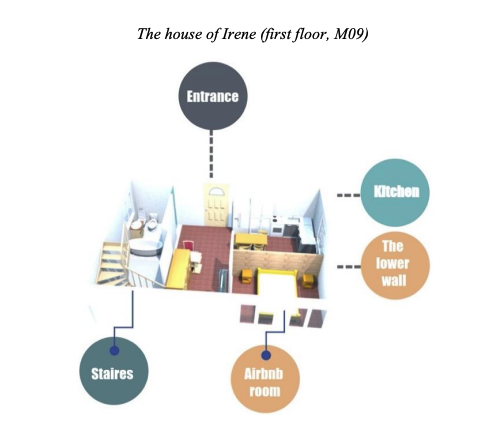
The photographs hosts had uploaded to the platform, the images I took myself, and my own memory of moving through the apartment helped me return to the situation later. They allowed me to reconstruct not only what the home looked like, but how hospitality had been arranged inside it.
Where was the host’s place within the structure of hosting?
Which parts of the home had been opened to strangers?
Which parts had been reduced, hidden, moved aside, or quietly transformed?
Over time, I began using this visual material to rebuild the apartments in three-dimensional form. This was not only a technical exercise. It helped me see patterns I had not fully understood while I was there: small compromises, changes in domestic routines, conscious decisions, and less conscious forms of giving up space.
A table moved to make room for guests. Personal objects gathered into one corner. A room that remained private. A corridor that became a boundary. A home that still belonged to the host, but differently.
The visual work helped me understand that hospitality was not only something people described. It was something they built, arranged, protected, and negotiated through space.
Alongside the ethnographic work, there were also many interviews, in which I invited participants to draw.
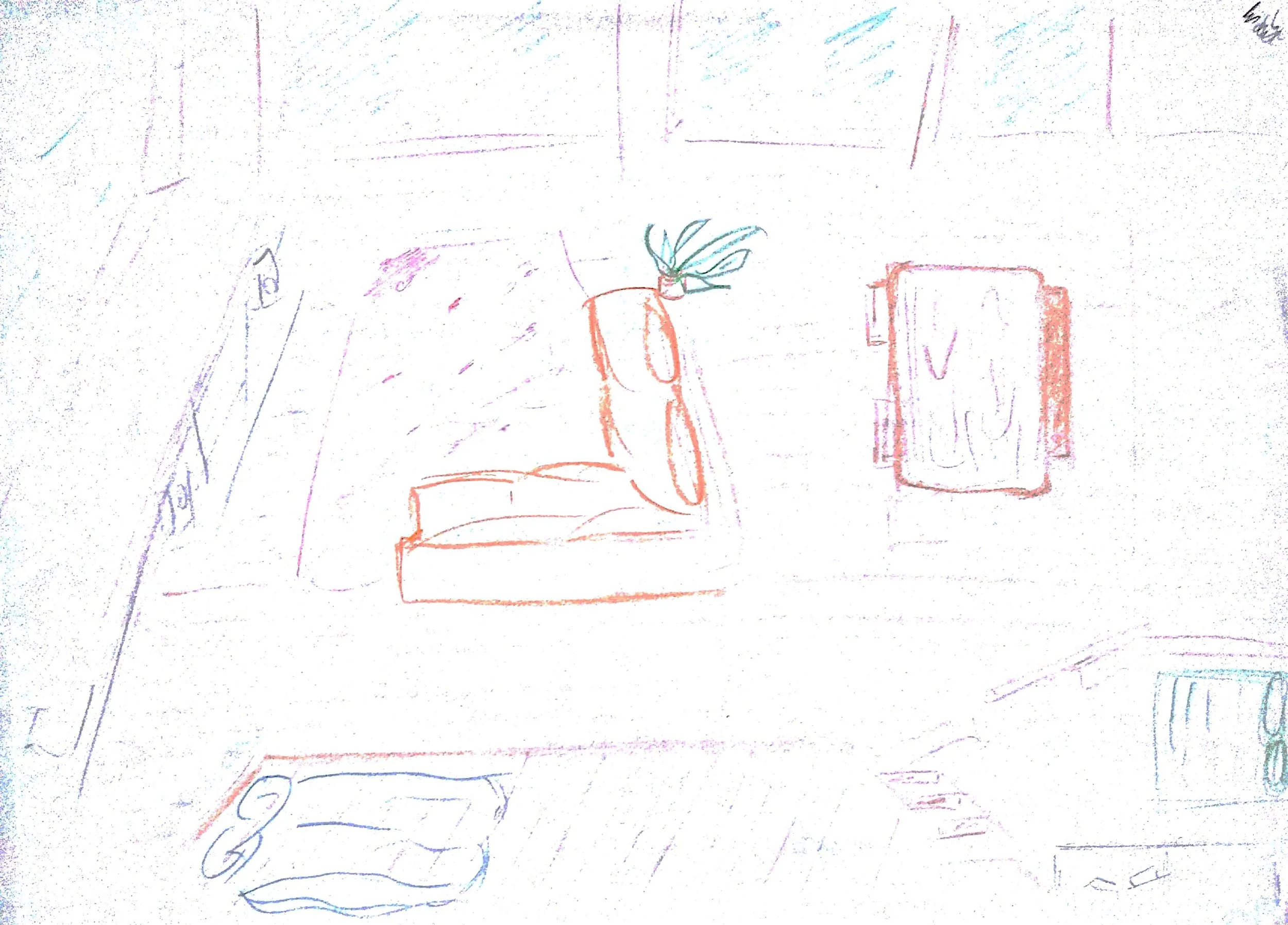
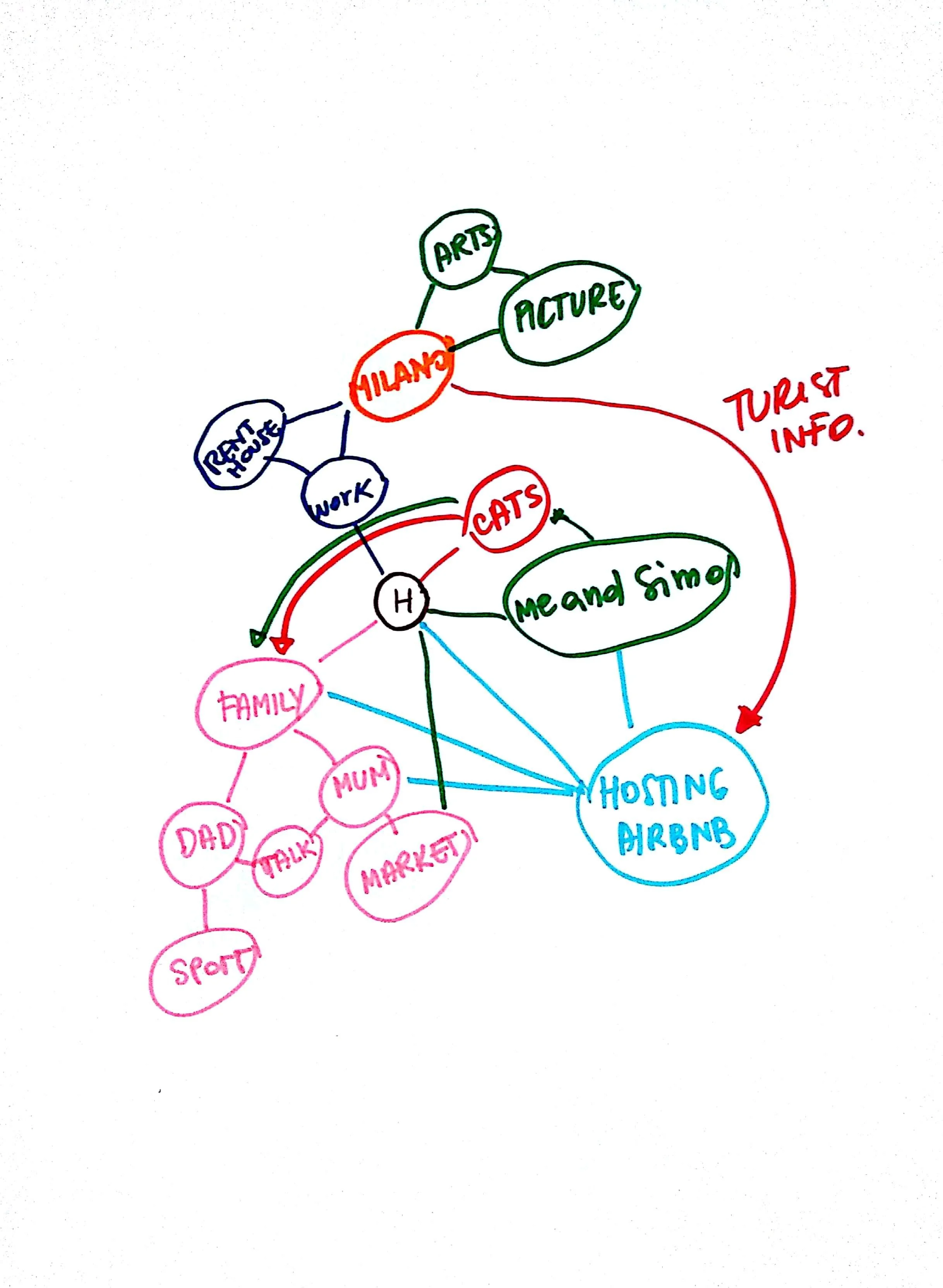
I asked them to map their daily geography: where they walked their dog, where they bought groceries, where their partner lived, where they met friends for a drink, where they moved without thinking and where they hesitated.
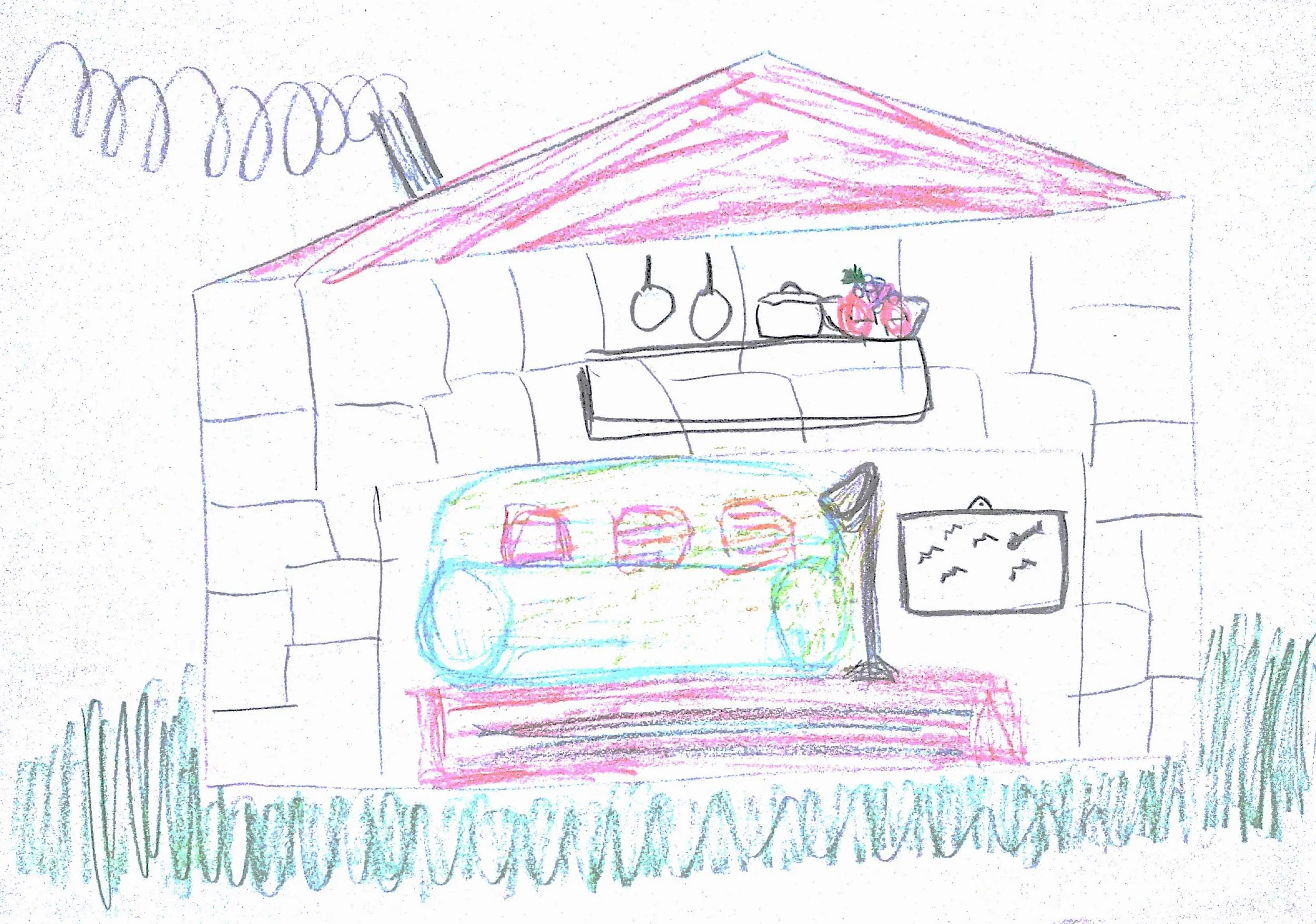
I asked them to draw their homes, marking the rooms or objects that mattered most.
These drawings were not artworks.
They were ways of knowing.
Often, participants discovered things while drawing. A room they had not expected to include. An object that suddenly appeared at the center. A place they drew far away because it felt emotionally distant. A park that was physically far but appeared close because it belonged to their sense of home.
Some people enjoyed the process immediately. Others were more hesitant. But again and again, the drawings made something visible that had not fully appeared in conversation alone.
Not because I interpreted the drawings for them.
Because the act of drawing slowed the mind enough for them to see their own experience differently.
Sometimes people do not know what they know until they see it in front of them.
Knowing a City from the Inside
The daily geography exercises became especially meaningful for me in Milan.
By then, Milan was the city I knew best. I knew its streets, rhythms, distances, neighbourhoods, and ways of moving. When participants described a route, a supermarket, a bar, a partner’s apartment, a park, or a familiar crossing, I could often feel the geography with them.
This changed the research.
I was not only receiving abstract information. I was entering a shared map.
I could understand why one route felt heavy, why another felt ordinary, why a place far away could still belong to someone’s home life, or why a nearby street could feel emotionally distant.
In Lisbon and Jerusalem, the experience was different.
The research itself began to dissolve my own sense of home. In Lisbon, I was living in a temporary apartment while moving repeatedly between other people’s homes for the fieldwork. Night after night, I entered domestic spaces that were not mine, slept in places shaped for guests, and studied the transformation of home while feeling my own stability loosen.
By the time I reached Jerusalem, I was emotionally exhausted and deeply in need of something more settled.
After the research period ended, returning to Pavia and building a home there with Chaya became more than a logistical step.
It was a restoration.
A return to the possibility that home could again be something lived from the inside, not only studied from the threshold.
When Conversations Begin to Open
The visual tools mattered, but they did not work alone.
Much of the depth came from time.
Alongside the visual exercises, I conducted long, open interviews — sometimes two hours, sometimes four. These conversations did not open because I used a clever method. They opened because people gradually understood that I was not looking for a headline, a scandal, or competitive information.
I was not there to expose them.
I was there to understand how they felt.
Once they sensed that, something changed.
Sometimes they told me the same story they had told earlier, but now with more detail, more contradiction, more vulnerability, more authenticity.
In some cultures this happened quickly. In others, it took longer. But again and again, I learned that people speak differently when they feel they are not being judged, rushed, or reduced to data.
Only then did the visual tools deepen the process.
Not by forcing openness.
By giving shape to what was already beginning to appear.
From Research to Coaching
I used to joke that I was not a psychologist.
Today, as an ACT-informed coach, I smile at that joke differently.
Because in coaching, I find myself returning to many of the same principles — not to analyze people from above, and not to interpret their drawings as if they contain hidden truths that only I can decode.
The point is different.
The point is to help people see themselves more clearly.
A drawing can become a mindfulness practice.
A map can reveal a pattern.
An object can carry a value.
A room can hold an emotion.
A route can show avoidance, longing, comfort, or possibility.
This is not art as decoration.
It is art as attention.
Research taught me that people often understand more than they can initially say. Coaching, especially when informed by ACT, gives that understanding a practical direction: noticing patterns, holding stories more lightly, clarifying values, and choosing small movements toward what matters.
Two Exercises to Try
Here are two simple exercises, inspired by the visual methods I used in research and by the way I now think about awareness, values, and emotional space.
They are not tests.
They are invitations to notice.
Exercise 1: Draw Your Home
Take a blank page.
Draw your home — not beautifully, not accurately, just honestly.
Mark the rooms or objects that matter most.
Notice what you include first.
Notice what you forget.
Notice what feels crowded.
Notice what feels empty.
This is not about architecture.
It is about attention.
Exercise 2: Map Your Daily Geography
Draw a simple map of your everyday world. Put an H (or any letter that start the word in your language!) in the middle.
Include places such as your supermarket, your favourite café, your workplace, your friend’s house, the place you walk your dog, the route you often take without thinking.
Draw the paths between them.
Notice which routes feel heavy.
Notice which ones feel light.
Notice where you linger.
Notice where you rush.
Notice which places you avoid.
This is not about navigation.
It is about meaning.
Seeing Before Changing
These exercises, simple as they are, can open a door.
They slow the mind.
They reveal patterns.
They make space for noticing.
And this is where ACT enters naturally — not as a theory placed on top of experience, but as a way of being with what appears.
ACT teaches us to notice thoughts, habits, emotions, values, and patterns without immediately judging them or obeying them.
To see more clearly.
To hold experience more lightly.
To choose with more awareness.
To move toward what matters.
At Coastline Heron, this matters because the space we are building is also a meeting place between words, art, attention, and practice. Chaya and I come to this from different directions, but we share the belief that insight does not always begin as an idea.
Sometimes it begins as a line.
A room.
A route.
An object.
An image we finally stop long enough to notice.
And once we see something more clearly, we may begin to relate to it differently.
