ACT
A Modern, Evidence‑Based Approach to Human Experience
Acceptance and Commitment Therapy/Training, or ACT, is a modern, evidence-based approach to human experience. At its core is the idea of psychological flexibility: the ability to stay present, open, and connected to what matters, even when difficult thoughts, emotions, or sensations are present.
In coaching, ACT offers a practical and compassionate way to work with stress, uncertainty, overthinking, avoidance, fear, and important life choices. The aim is not to eliminate discomfort or replace every painful thought with a positive one. Instead, ACT helps people change their relationship with inner experience, so that thoughts and feelings have less power to dictate action.
This makes ACT especially useful when old strategies are no longer working: trying harder to control the mind, waiting to feel ready, avoiding difficult conversations, or postponing meaningful action until life feels easier. Rather than asking “How do I get rid of this feeling?”, ACT often asks: “Can I make room for what is here, and still move toward what matters?”
At Coastline Heron, ACT forms one of the foundations of the coaching process. It supports a way of working that is reflective but practical, gentle but active, and focused not on becoming a different person, but on living with more awareness, flexibility, and intention.
Metaphor, Practice, and Everyday Awareness
ACT often uses metaphors, exercises, and simple practices to make psychological ideas easier to feel, not only understand.
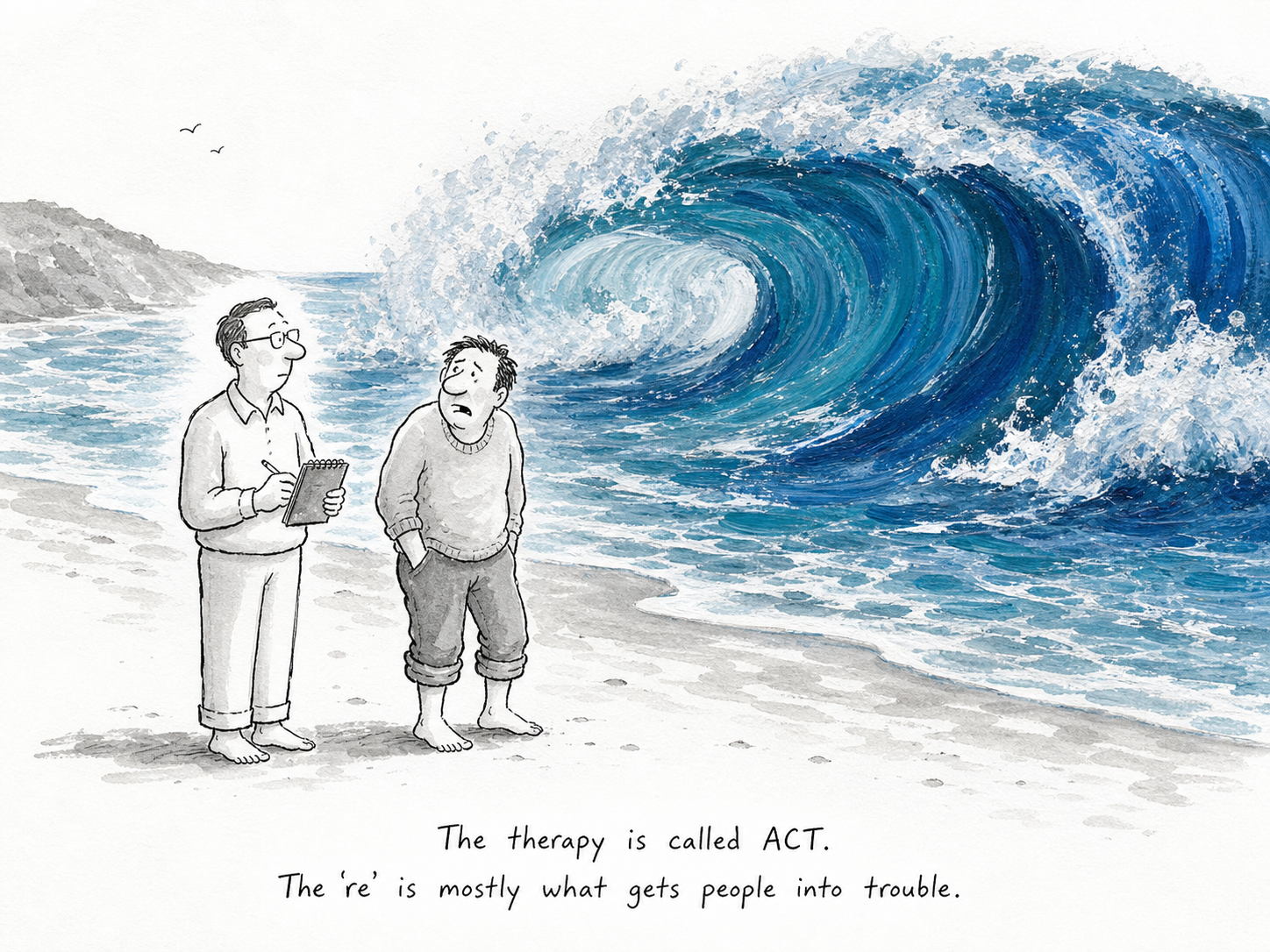
A person trying to stop waves with their hands.
A tug-of-war with a monster.
A heavy backpack filled with old stories.
A radio in the mind that keeps playing familiar messages.
These images are not just illustrations. They help people recognize how much energy can go into struggling with inner experience — and how different life can feel when we stop organizing everything around that struggle.
In practice, ACT may include reflection, grounding exercises, attention-shifting, values clarification, defusion strategies, and small behavioral experiments. The point is not to analyze endlessly, but to create small changes in how a person relates to thoughts, feelings, choices, and action.
The Six Core Processes of ACT
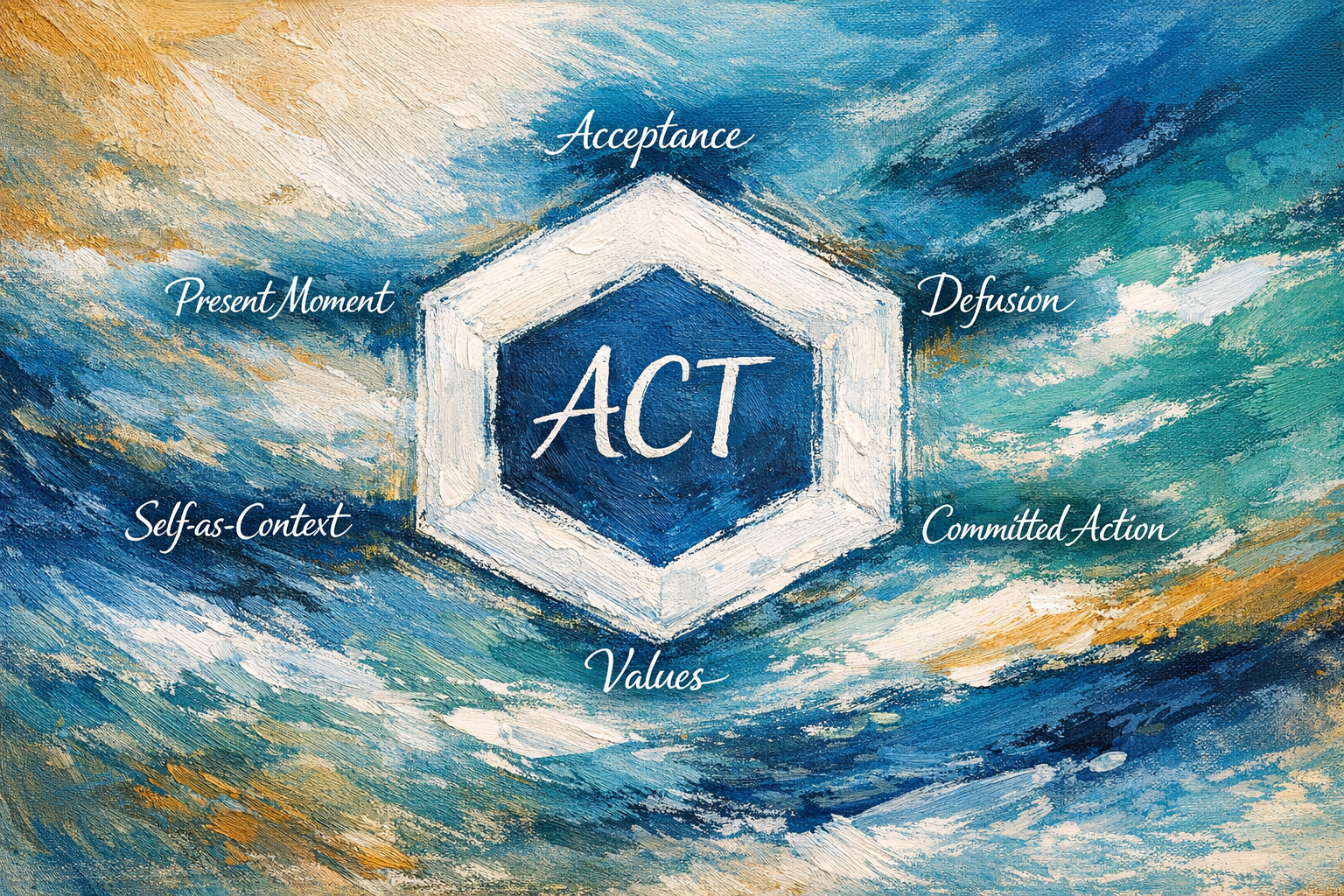
ACT is often described through six interconnected processes:
Acceptance
Making room for difficult internal experiences instead of constantly fighting or avoiding them.
Cognitive Defusion
Learning to see thoughts as thoughts, not as commands, facts, or fixed truths.
Present-Moment Awareness
Returning attention to what is happening here and now.
Self-as-Context
Discovering a wider sense of self that can notice thoughts, emotions, roles, and stories without being reduced to them.
Values
Clarifying what matters deeply and what kind of person you want to be in the situations you face.
Committed Action
Taking meaningful steps guided by values, even when discomfort, fear, or uncertainty are present.
Together, these processes help develop psychological flexibility: the ability to stay present, open, and engaged in meaningful action.
A Body-Aware and Trauma-Sensitive Lens
The way I work with ACT is also influenced by contemporary understandings of the nervous system, stress, and the body’s role in shaping experience.
Writers and researchers such as Bessel van der Kolk, Stephen Porges, and Gabor Maté have helped bring attention to something many people recognize in their own lives: difficult experiences are not held only as thoughts. They can also live in the body as tension, vigilance, shutdown, reactivity, exhaustion, or emotional overwhelm.
This does not mean every coaching conversation is trauma work. It means I try to listen with respect for the body, the nervous system, and the complexity of what people carry.
ACT fits naturally with this sensitivity because it does not demand that people erase the past, control every reaction, or become calm on command. Instead, it helps create space around experience — enough space to notice, breathe, choose, and move in ways that are more connected to values and life.
Healing, in this sense, is not the absence of pain. It is the growing ability to live with greater flexibility, compassion, and connection to what matters.