

Hi, I’m Roei Bachar-Hurwitz.
I’m a sociologist, researcher, and ACT-informed coach with a PhD in sociology and a lifelong interest in how people move through change, pressure, relationships, identity, and uncertainty.
Much of my adult life has been shaped by movement — between countries, languages, professional worlds, and different ways of living. I was born in Israel, close to the sea, and for as long as I can remember I was drawn to cultures, food, language, and the feeling that life could be lived in more than one way.
In my mid-twenties, I reached a point where I knew something in my life needed to change. I moved alone to Italy, officially for a master’s degree in sociology, but also out of curiosity, longing, freedom, and a wish to begin again.
What began as an academic journey gradually became a deeper exploration of human experience. I completed both my master’s degree and PhD in sociology in Italy, where my research focused on emotions, belonging, identity, relationships, homes, and the ways people adapt to change and uncertainty. My doctoral work later took me across Milan, Lisbon, and Jerusalem, studying how Airbnb hosts experience opening their homes to strangers, and how those encounters can reshape the meaning of home itself.
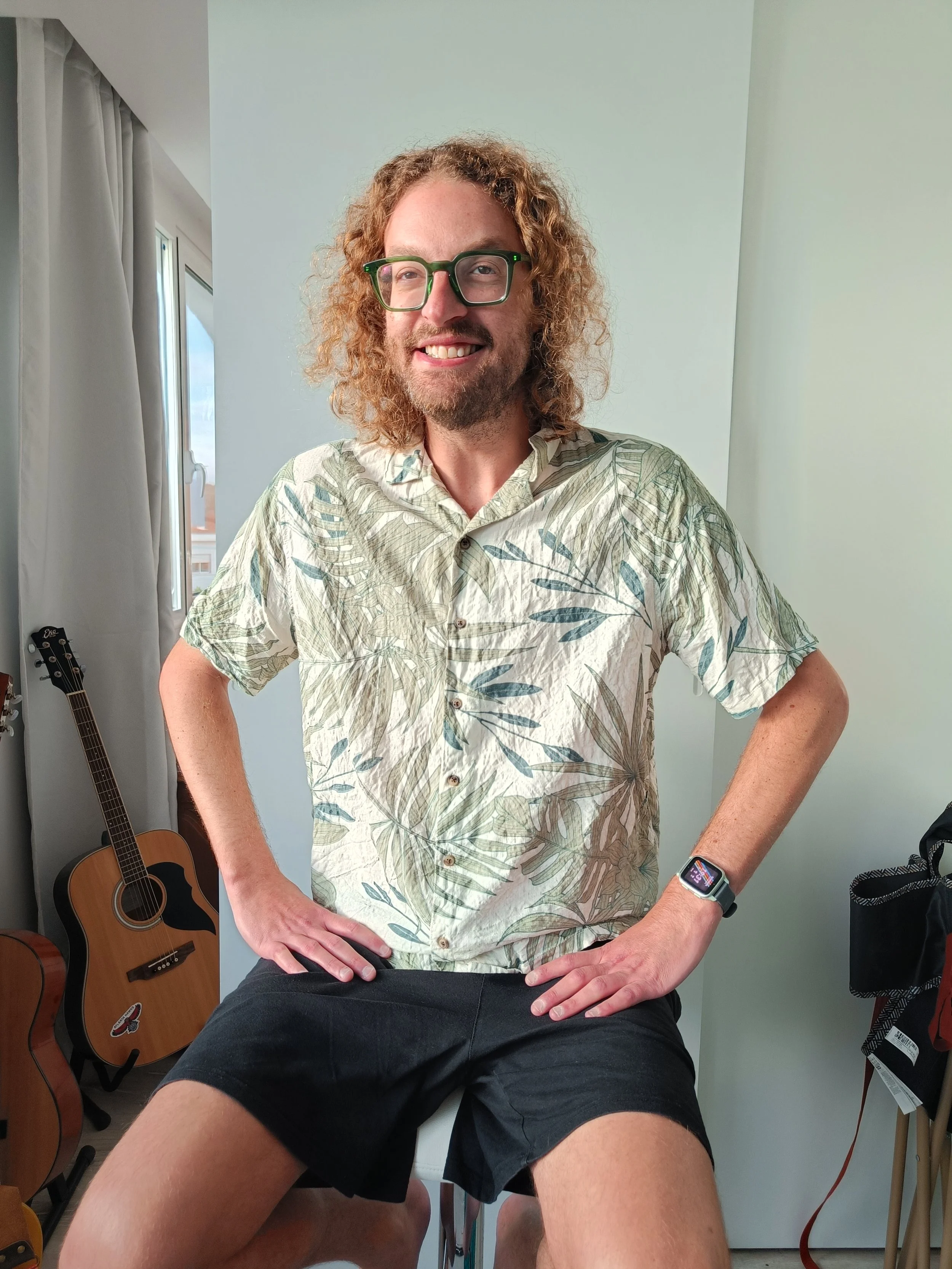
Much of what matters to me has also been learned outside formal work and study — through yoga, food, movement, music, sport, walking, cycling, swimming, baking bread, playing guitar, noticing birds and trees, and living close to the ocean.
These are not separate from how I understand coaching. They are part of the same attention to practice, patience, rhythm, frustration, curiosity, and small repeated choices. Yoga teaches presence and returning to the body. Baking teaches waiting and care. Guitar teaches awkwardness, repetition, and returning. Sport teaches pressure, mistakes, teamwork, and the next play. Relationships teach listening, repair, and the ongoing practice of choosing how to meet one another.
Relationships, belonging, and the meaning of home have been central to my work and life for many years. In my first research project in Italy, I explored the sociological dimensions of romantic relationships — how people form bonds, negotiate closeness and distance, make sense of intimacy, and live inside the expectations, stories, and social meanings that shape love.
These questions continued to appear in different forms throughout my academic path. They appeared in my research on women’s basketball, through team relationships, identity, belonging, and the emotional life of the game; and in my doctoral research, through trust, boundaries, hospitality, and the meaning of home.
They are also personal questions. My understanding of relationships has been shaped not only by research, but by lived experience — by the ordinary and sometimes difficult practices of closeness, distance, commitment, misunderstanding, repair, and choosing again. Living across countries, languages, and cultures has also taught me that relationships are not fixed things. They are ongoing practices of listening, adjusting, caring, and learning how to move together without losing oneself.
Sport has also been a central thread in my life. I grew up in a family where sport was part of everyday life, and from a young age I was close to the emotional world of competitive performance — the excitement, pressure, discipline, disappointment, identity, and uncertainty that come with it. Basketball, in particular, has always felt like one of my homes. I played the game myself, followed it closely, continued in amateur teams from Tel Aviv to Milan, and later studied basketball, especially women’s basketball, through ethnographic research.
Alongside academia, I worked in very different environments — banking, retail management at IKEA, sales, and later as an account manager at EBSCO. These roles exposed me to another side of human life: organizational pressure, expectations, communication, customer relationships, leadership, teamwork, and the quiet struggles people often carry behind professional roles and everyday routines.
Across these different places — research, relationships, sport, work, movement, and everyday practice — I became increasingly interested in the same questions:
How do people stay connected to what matters under pressure?
How do we move through uncertainty without losing ourselves?
How do we make decisions when there is no perfect answer?
How do we build relationships, teams, and lives that are more flexible, honest, and alive?
These questions eventually led me to Acceptance and Commitment Training, or ACT.
ACT gave language and structure to many things I had already been circling for years: the importance of values, the difficulty of living with uncomfortable thoughts and emotions, the limits of control, and the possibility of acting meaningfully even when life is uncertain, painful, or unclear.
My work as a coach is informed by ACT, but also by sociology, mindfulness, movement, creativity, research, and lived experience. I do not see people as problems to be fixed. I see people as whole human beings moving through complex lives, often doing their best with the tools, histories, relationships, and pressures they carry.
In coaching, I try to create a space that is thoughtful, honest, practical, and human. My style is warm, attentive, curious, and grounded. I listen carefully, but I also try to help people move from insight into practice.
This may involve conversation, reflection, values work, mindfulness, writing, movement, metaphors, small experiments, or practical steps between sessions. The goal is not to become a different person, or to remove every difficult feeling. The goal is to develop more flexibility — to meet life more openly, and to move with more clarity toward what matters.
Today, I live with Chaya near the Atlantic coast of Portugal, where Coastline Heron was born. The ocean, movement, art, food, music, sport, yoga, and everyday practice continue to shape how I understand change.
I offer coaching for individuals, couples, organizations, athletes, and coaches — in English, Hebrew, and Italian — online and in person when possible in the Lisbon / Costa da Caparica area.
If you are navigating change, pressure, uncertainty, relationships, performance, or a moment in life that asks for more clarity, I would be glad to meet you there.

Conversations & Sessions
Languages
Sessions are currently available online in English, Hebrew, and Italian.
Italian remains an important part of my life and journey, even if it has become a little rusty after years of living elsewhere. Portuguese is slowly finding its place as well.
Meetings
Most conversations take place online, allowing flexibility for people living in different countries and time zones. For people based in Lisbon and the surrounding area, in-person meetings may also be possible, depending on availability and location.
We Are Here For You…
If you have questions, thoughts, or anything you would like to explore before booking, feel free to reach out. We are here to help you understand what working together could look like.