

The Act of Bread
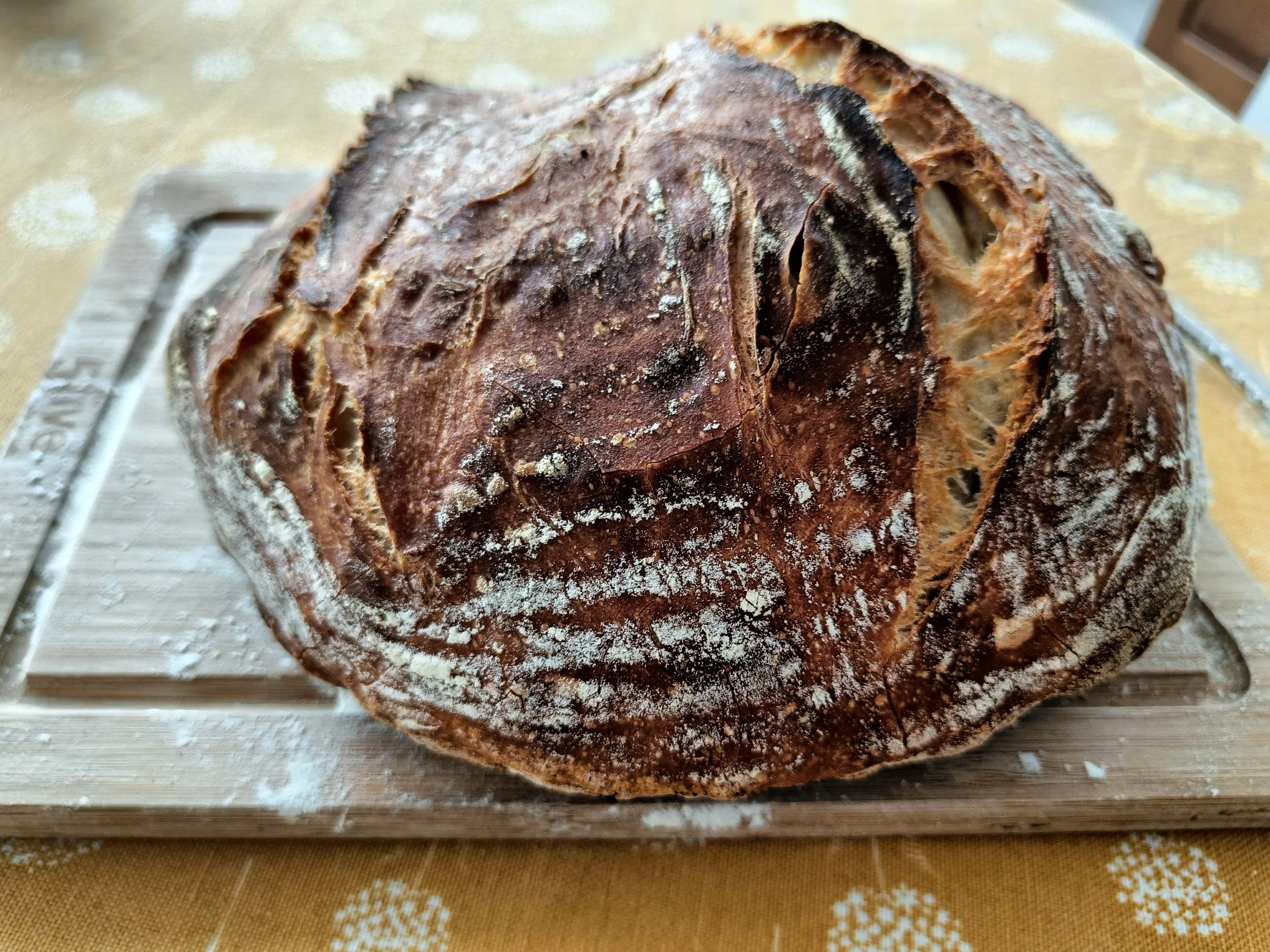
There are many ways to enjoy bread.
You can buy it at the supermarket. You can find it in a small bakery on the corner. You can walk past a window, smell something warm coming out of the oven, and suddenly feel that the world has become more generous.
One of my first memories of living outside my parents’ home is connected to a little bakery near my apartment back then. I do not remember every detail of that place now, but I remember what it opened in me: curiosity, appetite, and a quiet fascination with the world of bread.
Only much later did I learn the term “picky eater,” and recognize how much of my early life with food had been shaped by caution. Bread was one of the first places where that caution began to soften.
The bakery did not only sell plain bread. It offered loaves with things I could not imagine eating directly at the time: tomatoes, onions, garlic. Inside bread, somehow, they became approachable. The bread carried them for me. It made the unfamiliar less threatening, more fragrant, more possible.
Bread was simple, but not ordinary.
It could be daily and still feel special. Familiar and still full of variation. A loaf, a roll, a slice, a crust, a crumb — each one carrying its own small promise.
For a long time, I only knew bread as something to buy and enjoy.
Then I discovered that you could also make it.
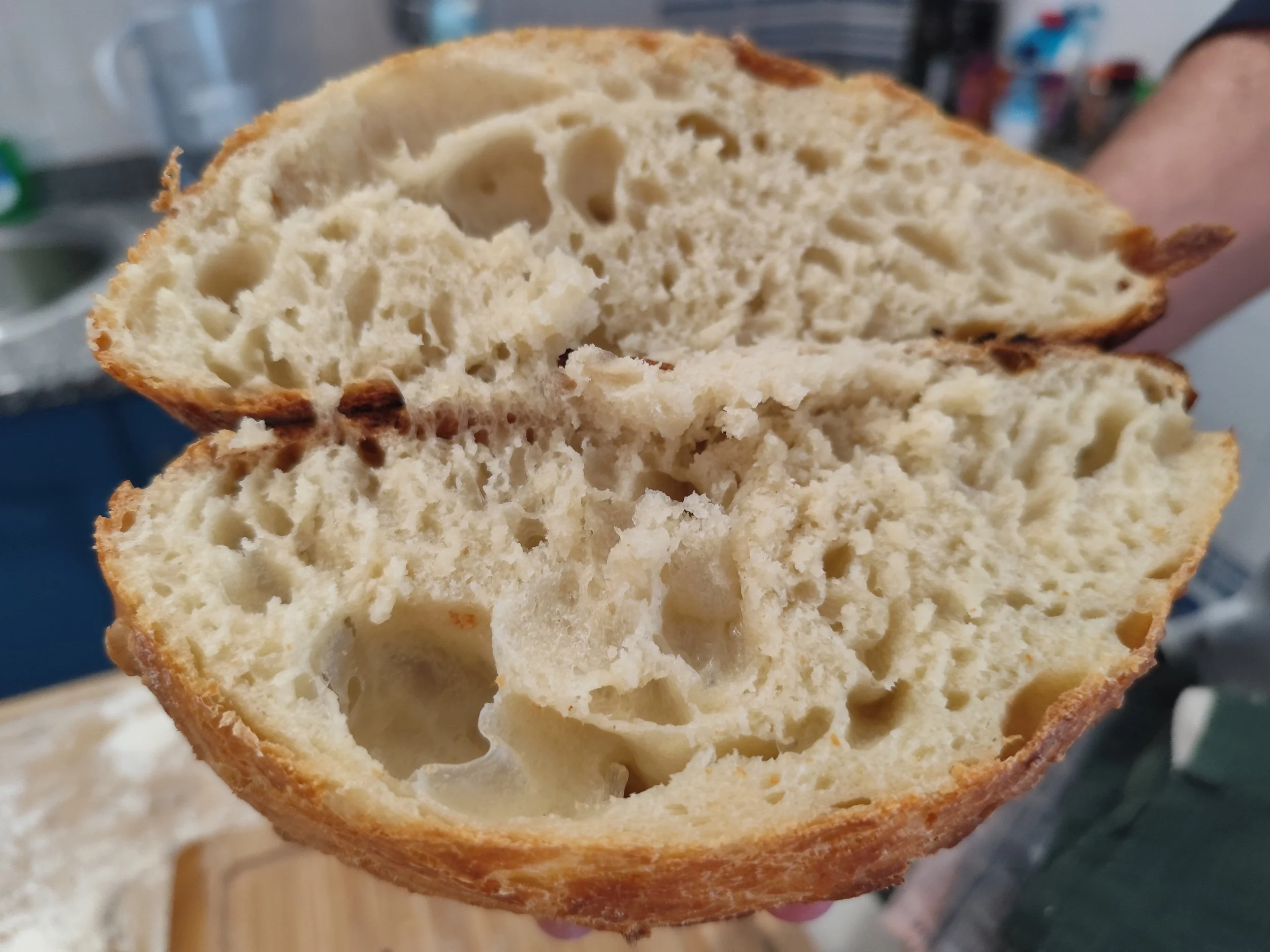
The discovery came through an Italian partner from that period. She had received a bread machine, and until then I had not really known such a thing existed: a small domestic device that could take flour, water, yeast, and time, and turn them into something warm and edible while you did very little.
It seemed almost magical.
I bought one for myself.
She warned me that it was a waste of money, that I would use it twice and then forget about it. In the beginning, she was right. I used it a couple of times, enjoyed the novelty, and then the machine sat there quietly for a few months.
But that pause was only a small beginning, not the real story.
What followed was a relationship with flour, water, yeast, heat, and repetition that has now lasted for around fifteen years.
For a long time, the bread machine was the center of that world.
I used it for loaves, of course, but also as a way to mix and begin all kinds of doughs: pretzels, breadsticks, pitas, endless ciabattas, sandwich loaves for trips, and strange but delicious pizzas, including early versions made with cottage cheese that I would not necessarily defend today, except to say that they were much better than they sound.
It became a small laboratory.
I tried different flours, ready-made mixes, recipes that looked too easy, recipes that looked slightly suspicious, and anything that promised the possibility of warm bread at home. Some results were better than others, but almost all of them were exciting because they proved a simple point:
I could make this.
My small kitchen in Pavia became full of recipes glued to the kitchen cabinets, ready for immediate use. I wanted to be able to make whatever I wanted, whenever I wanted. This was helped by the fact that, before Covid, the nearby supermarket was open twenty-four hours a day — a fact I used with real dedication. If a thought arrived late at night, there was a chance it could still become dough.
At first, bread was not mindfulness.
It was play.
It was appetite.
It was the pleasure of discovering that a small kitchen could contain far more life than expected.
That same Italian partner opened another important door for me.
She taught me a great deal about the foundations of Italian cooking: how to respect simplicity, how to choose ingredients, how to let a few good things become enough. Through her, food became less like a set of instructions and more like a culture of attention.
She also took me to Bologna to meet people from her world, and there I encountered another miraculous object: a small Italian home pizza oven, the kind that can reach around 400 degrees. Not a professional oven, not a restaurant oven, but something domestic and surprisingly simple.
They made fresh pizza for us.
I did not want to leave Bologna.
At the time, that oven remained mostly a memory: a possibility I had seen, admired, and filed away somewhere in the back of my mind.
And then Chaya entered my life, and the kitchen changed again.
Until then, I had mostly grown inside the world of the bread machine. I used it creatively, often, and with real affection, but it was still the center of the process. Chaya brought her own knowledge, experience, and excitement into the kitchen, and with her the practice began to grow beyond the machine.
She did not simply admire what I was trying to make; she entered the work with her own hands, her own memory, her own taste, and her own imagination.
Some things became hers in a way I could only admire: her challah, her Jerusalem bagels, the particular care she brings to dough, shape, and tradition.
Slowly, the kitchen became less of a private laboratory and more of a shared studio.
And somewhere in that shared life, the memory of the little pizza oven from Bologna returned.
This time, it was not only a beautiful object from someone else’s kitchen. We realized it was reachable, affordable, and possible for our own. When we brought one home, it changed everything again.
Suddenly dough had more possibilities.
Pizza became more serious. Heat became part of the craft in a new way. The oven did not replace the work of the hands, but it changed the horizon of what the hands could hope for.
From there, the work continued to expand.
There was the KitchenAid, which became its own stage in the story. It gave us more control than the bread machine, but still offered support. We could work with wetter doughs, larger batches, longer processes, and new textures. The dough was no longer hidden inside a machine from beginning to end. We could see it forming, changing, resisting, softening.
And slowly, more and more, came the hands.
Kneading, folding, stretching, waiting. Learning the moods of dough: when it is too tight, too wet, too tired, too eager; when it needs more time, more strength, more gentleness, or simply to be left alone.
There is a strange meeting point in bread between mathematics and emotion.
Measurements matter. Hydration matters. Time matters. Temperature matters. But so does touch. So does experience. So does the willingness to notice what is happening now rather than forcing the dough to become what the recipe promised.
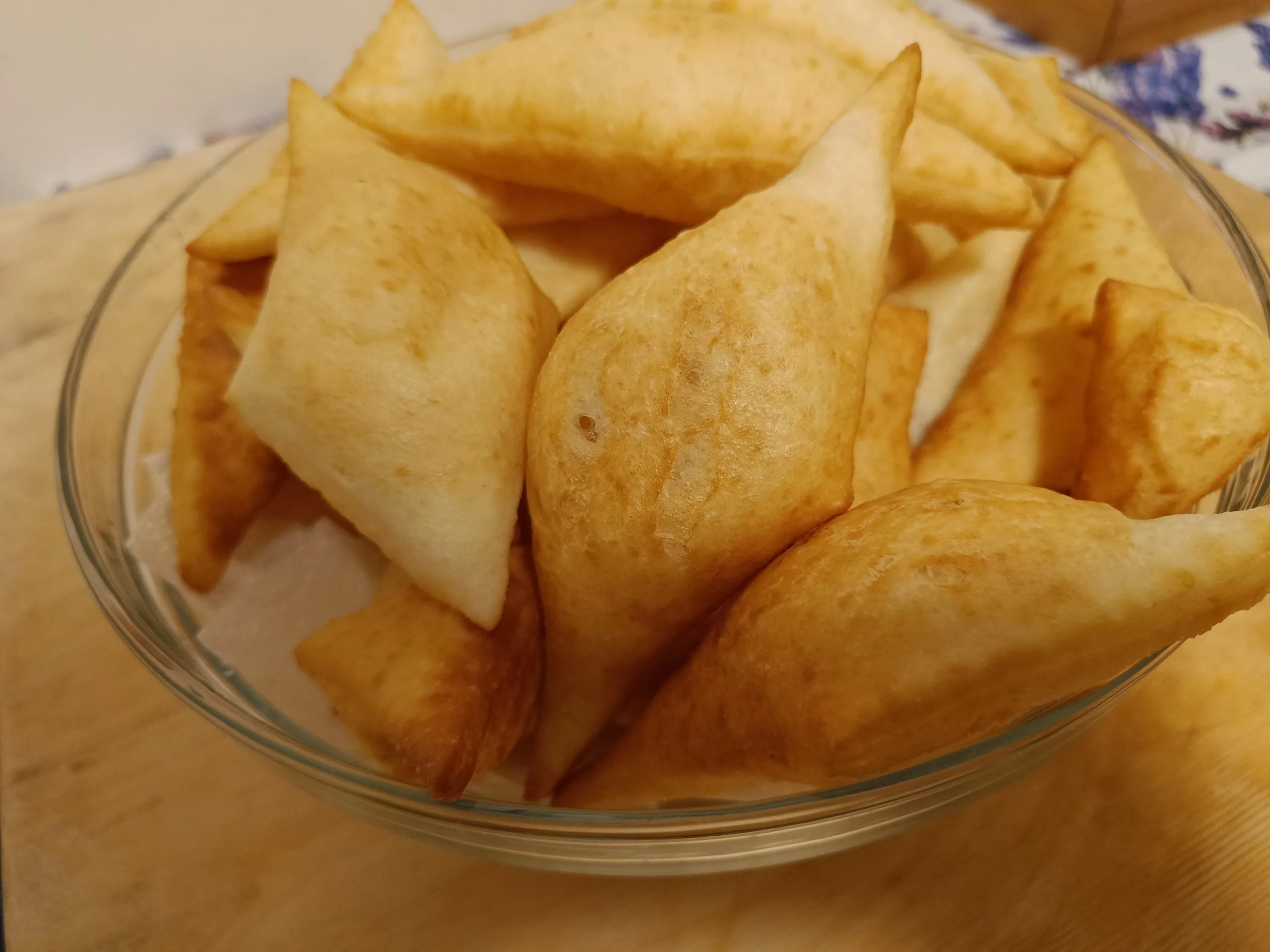
Gnocco Fritto.
That is much closer to how I bake today.
Today, dough is one of the languages of our home.
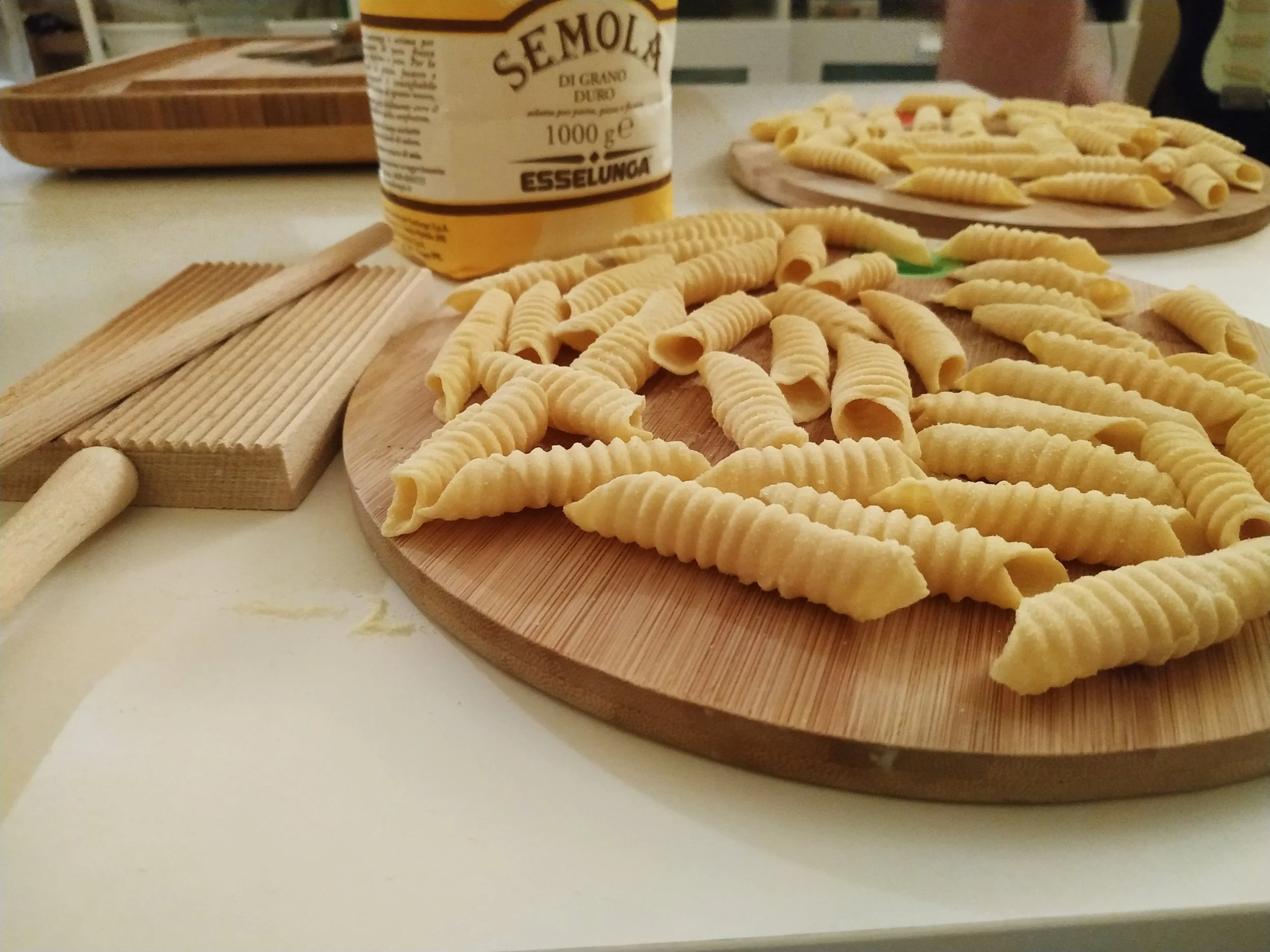
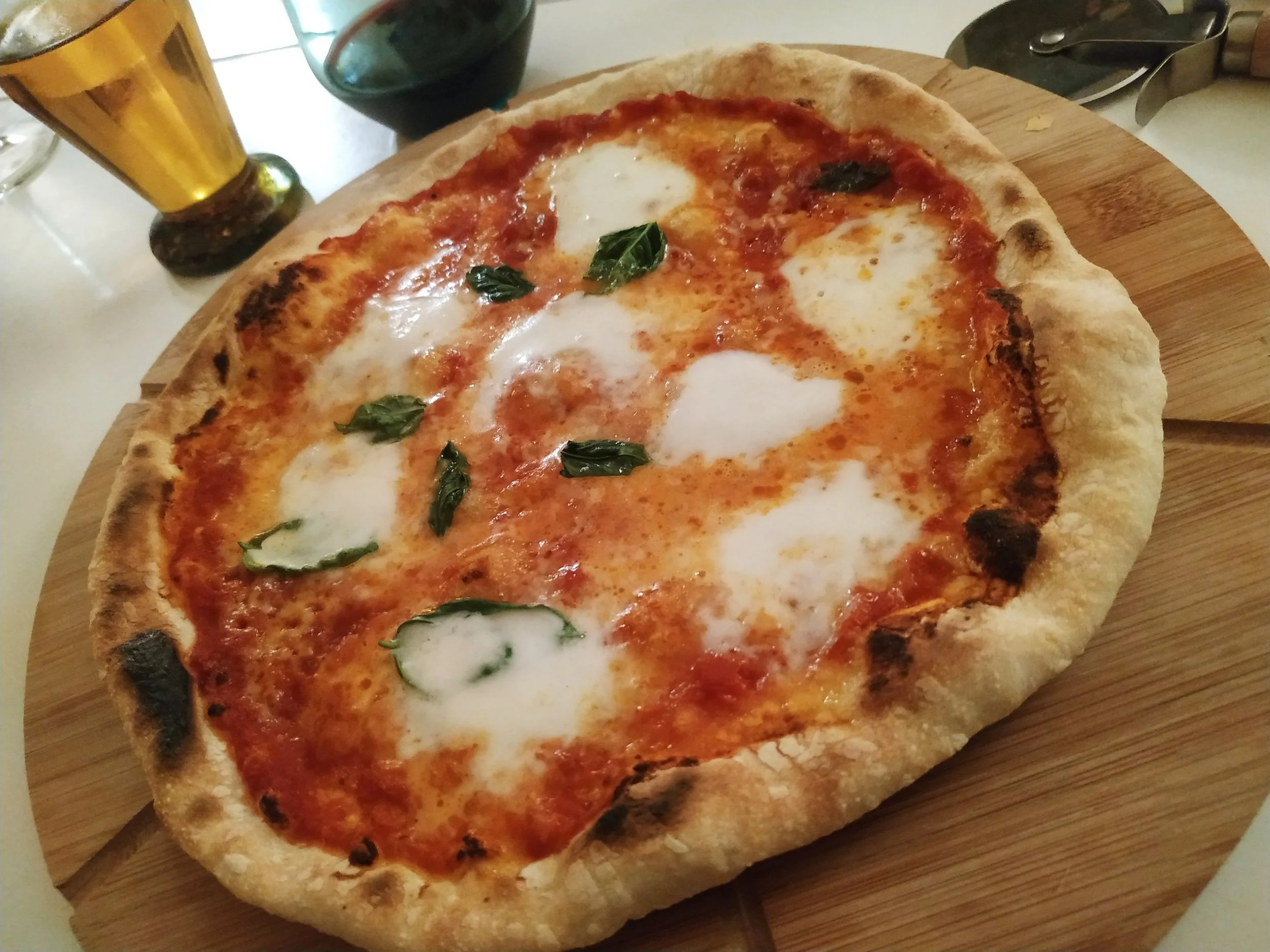
We often share the making of fresh pasta, sometimes dividing the work between dough and shapes, sometimes moving together around the table. Chaya has become the one who carries our pizza world forward: very thin and crisp, classic Italian, Neapolitan, and even the occasional fried version. I continue to return to bread in all its forms.
And the opening that began with bread continued in other flavours too.
Italy helped me become less narrow around food. Chaya helped even more. Pesto, which I could not once imagine tasting, eventually became something we prepare at home with great seriousness and joy. Pizza became another bridge: toppings, textures, combinations, and flavours I might once have refused before even meeting them.
Again and again, bread was there — not as a solution, but as a gentle bridge. A familiar form that made new things possible.
This is where bread meets mindfulness for me.
Not as a romantic idea added from the outside, but as something that happens through the senses.
The smell of dough before it enters the oven.
The touch of a bubbly, airy mass under the palms.
The sight of a loaf opening in the heat.
The quiet crackling sounds as the crust cools.
The first cut.
The first taste.
Mindfulness is not always stillness. Sometimes it is flour on the counter, a timer in the background, a warm oven, and the ability to stay with what is happening long enough to understand what it needs.
Baking also teaches a kind of humility that I trust.
You can follow the steps, use the right flour, measure carefully, and still not fully control the result. Sometimes the dough rises beautifully. Sometimes it refuses. Sometimes the crust is perfect and the inside is not. Sometimes a mistake becomes something unexpectedly good. Sometimes it is simply a mistake, and you try again.
That, too, is part of the craft.
The work is not to demand perfection from every loaf. It is to stay in relationship with the process: to notice, adjust, learn, accept, and return.
Bread taught me that practice does not always begin with discipline.
Sometimes it begins with appetite, curiosity, a small kitchen, a strange pizza, or the feeling that you might be able to make something you once only bought.
Over time, it became a way of paying attention: to dough, to heat, to timing, to taste, to the people I cook for, and to the parts of life that become richer when we stay with them.
A loaf of bread is never only a loaf of bread.
But it also does not need to be more than that.
Sometimes it is enough that it is warm, shared, and made with care.
