

The Rhythm Between Two Wheels
I once met a couple who had come to town for a marathon. When I asked about the race, I realized that they were not really running together — not in training, not in pace, not even during the event itself. They shared the sport, but not the movement.
There is nothing wrong with that. Every couple finds its own way of being together and apart. But it made me notice something I had taken for granted: for Chaya and me, sport often becomes a shared landscape.
Cycling, especially, has become one of the ways we move together through the world.
One of our most familiar rides was in Pavia.
The bicycle could take us out of the small, beautiful streets of the city almost instantly. For a moment we would pass larger roads, and then the landscape would open: the river park, the small wooden bridges, the gradual entrance into the forest, the sense of sinking into green. Sometimes the path would bring us back to the little stone beaches along the water. Eventually we would reach what we came to call “the near beach.” On more ambitious days, we continued toward “the far beach,” which required a longer and more demanding ride.
Those names were not official. They were ours. And like many private names between people, they made the landscape feel like part of a shared life.
Over the years, cycling has taken us across rivers, lakes, streams, fields, forests, city edges, and unfamiliar village roads in France, Italy, and Portugal. Once, in the mountains, we even rented electric mountain bikes and discovered a completely different kind of freedom: climbing higher than our regular bikes would have allowed, while still feeling the road through the body.
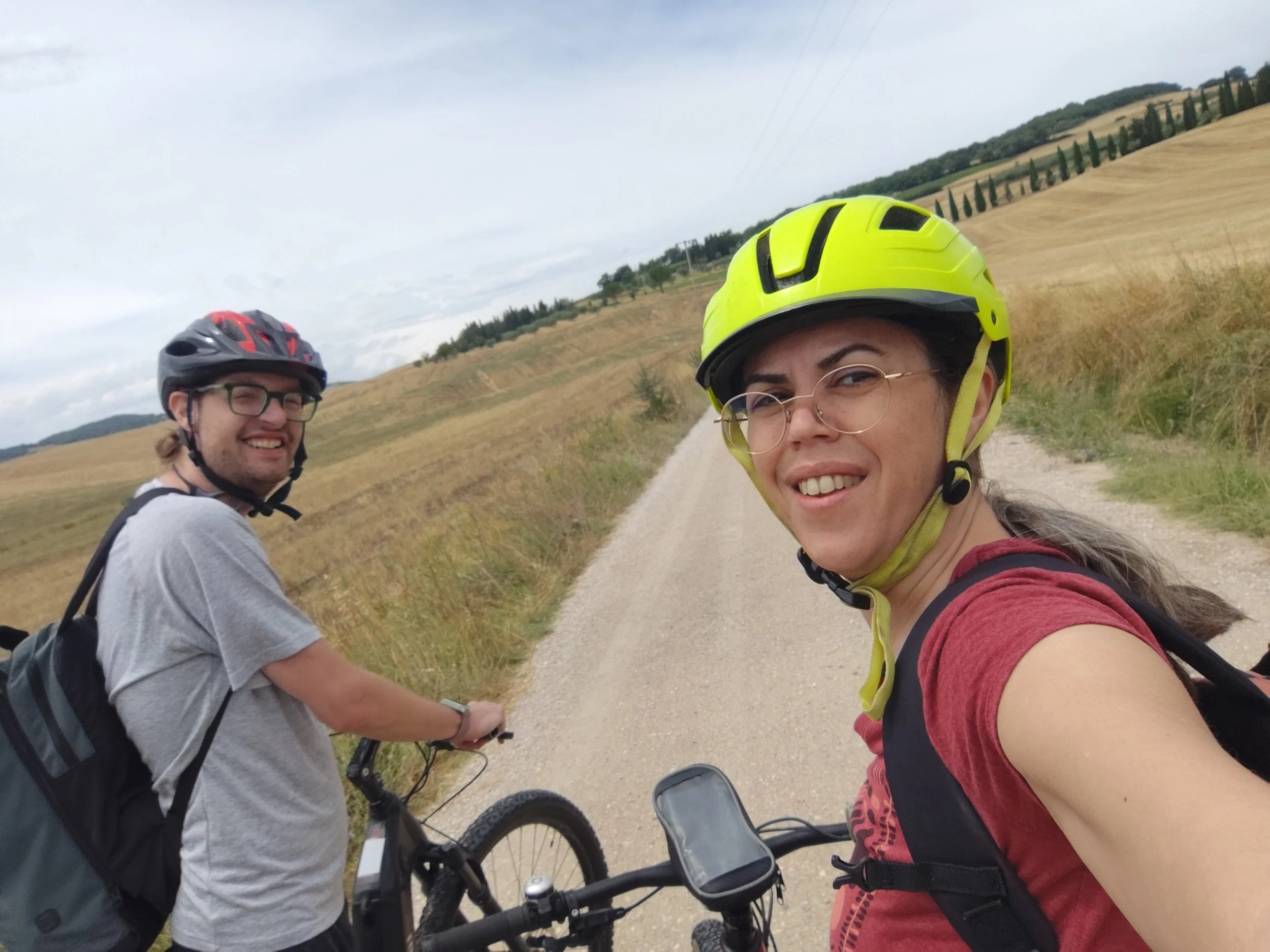
Part of the pleasure begins before the ride itself.
We plan the route, choose a destination, and try to understand the uncertain parts: a path that appears on the map but may not be rideable, a road that might turn into gravel, a crossing that may or may not exist, a stretch of shade, a climb, a field, a riverbank. Sometimes the ride is built around a destination — a museum, a football match, a place to eat, a beach, a lake. Sometimes the route is the destination.
And then there are the gifts no map can promise: a field of flowers, sunflowers turning toward the light, a line of trees, a stream we did not know we would cross, a view that suddenly makes the whole detour worthwhile.
Of course, the map is never the ride.
We have entered paths that looked promising and turned out to be barely rideable. We have stopped in front of muddy tracks, broken surfaces, unclear turns, or roads that seemed to lead nowhere, trying to decide whether to continue or turn back. We have watched light rain begin and wondered whether it was only a passing drizzle or the start of a ride we would regret.
These are small decisions, but they reveal a lot. Do we insist on the plan? Do we adapt? Do we laugh? Do we blame the map, the weather, each other, ourselves? A ride has a way of showing how people meet uncertainty together.
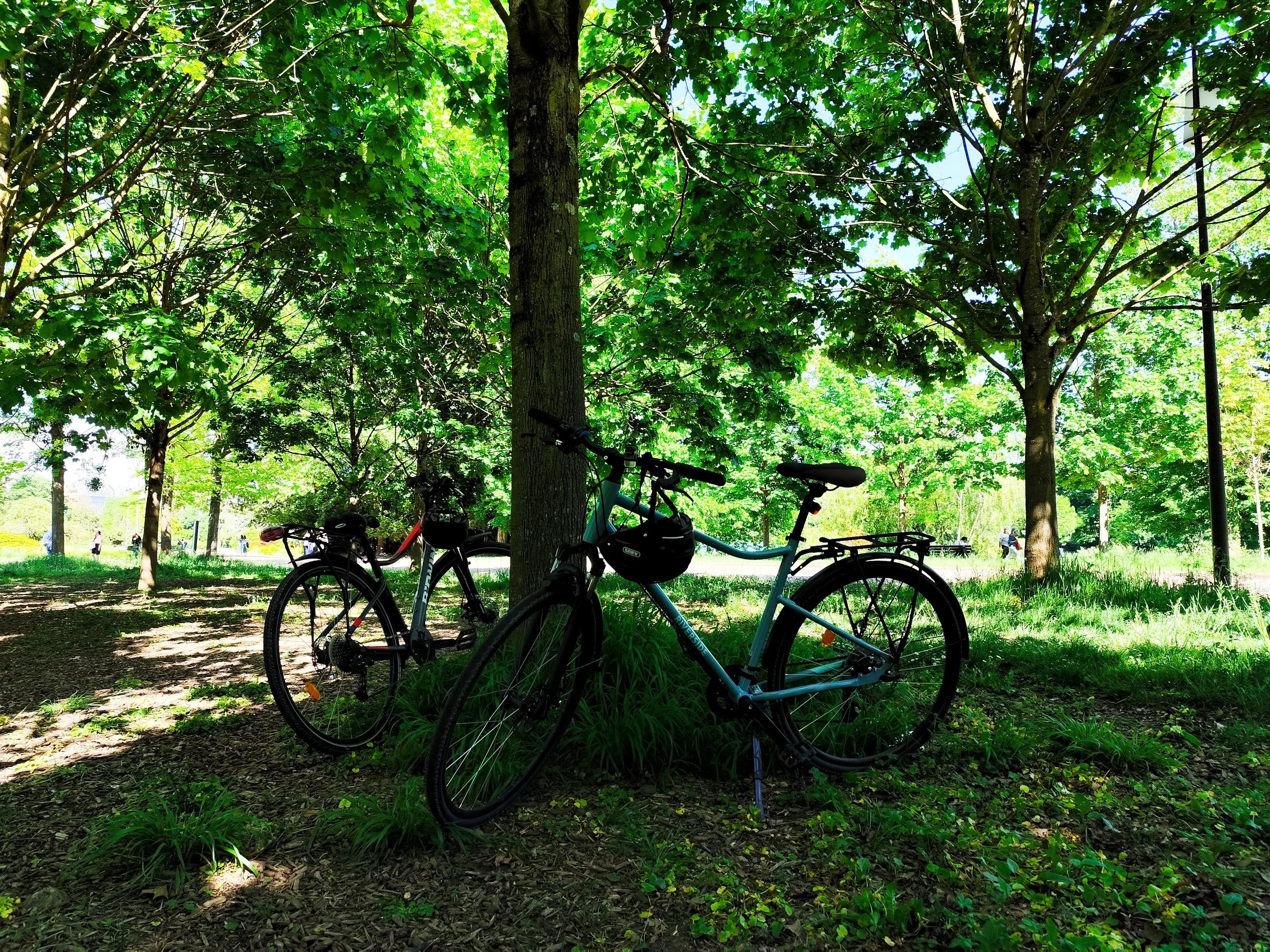
Then comes the question of pace.
When I am alone, I do not exactly choose my pace. I seem to fall into it. Walking or cycling, my body tends to find a rhythm and stay with it, sometimes faster than I planned, sometimes simply because that is how I am built.
With Chaya, another possibility appears. It is not that she slows me down, or that I slow her down. She loves speed, sometimes more than I do, especially on wide, open stretches where the road becomes almost a straight line and she can feel what the bike — and her own strength — can do.
But when we ride together, speed becomes relational. It depends on energy, road, weather, mood, conversation, silence, and the small adjustments between us. I can ride slower than I would alone and enjoy it. I can ride faster than I expected and enjoy that too. The rhythm is not something one of us imposes. It is something we keep finding.
Music adds another layer.
It is hard to imagine a ride without it. The right soundtrack can transform the experience: gothic doom on a cold day, Tame Impala on a spring morning, The War on Drugs for a contemplative afternoon. Today, bone-conduction headphones make it possible to hear both the music and the world — the wind, the birds, the road, and most importantly, your partner’s voice.
As we became more confident cyclists, conversation became easier too. At the beginning, so much attention went into the road, the balance, the cars, the next turn. Later, there was more space to talk.
But some of the best moments are quiet. Music in the headphones, the landscape moving beside us, the sound of wind and birds still present, and Chaya nearby — sometimes beside me, sometimes ahead, sometimes just behind. Not every form of connection needs words. Sometimes it is enough to share direction.
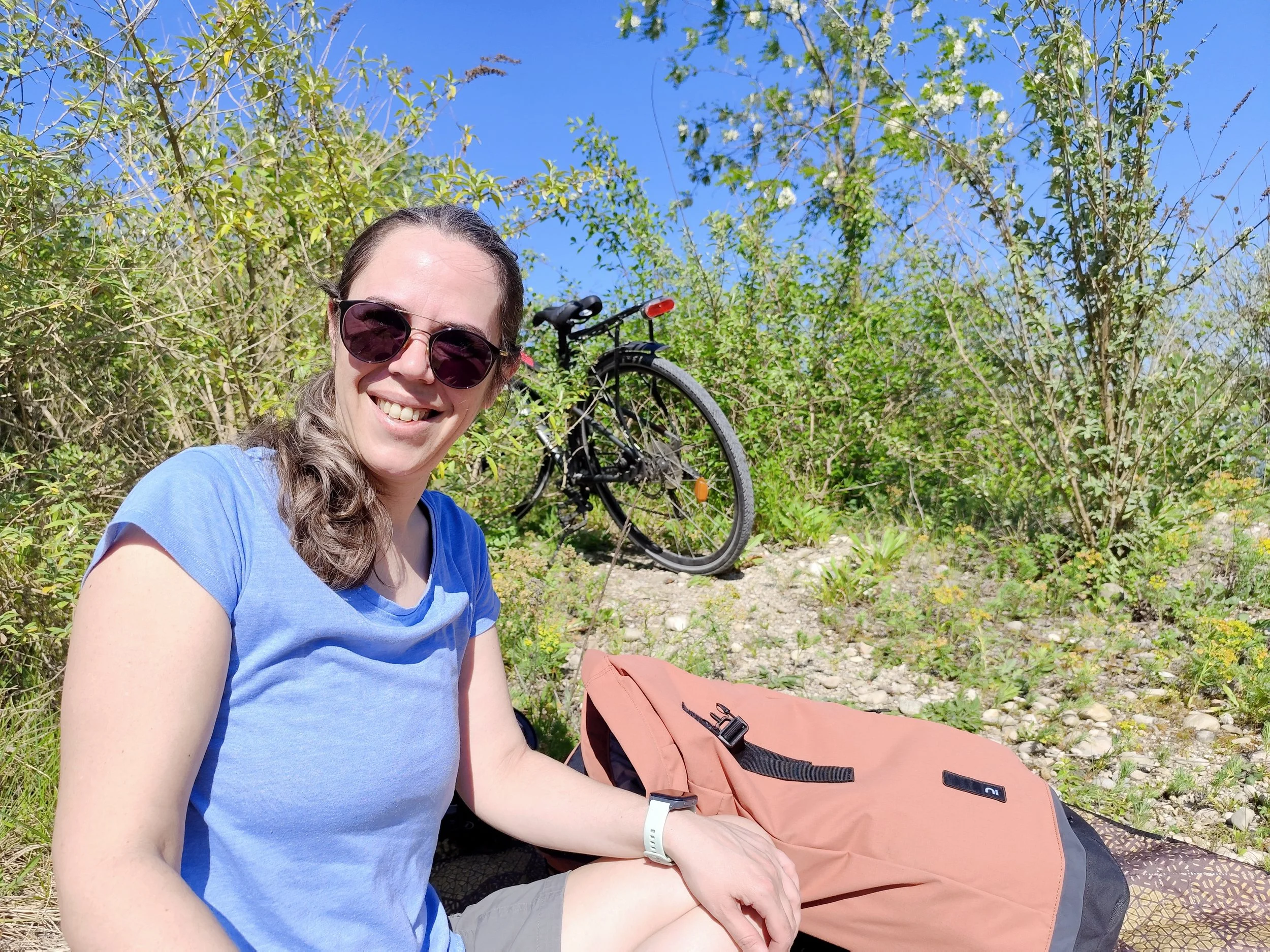
Then there is the question of how to ride together: side by side, or one behind the other.
It sounds obvious: side by side. But it is not always possible, and even when it is, it asks for attention. Riding next to someone means constantly sensing where they are — partly to reassure yourself they are fine, partly because there is real joy in seeing your partner happy in motion. But you also need to look at the road, the trees, the horizon. You need to stay connected without disappearing into the other person.
When the road narrows, one person goes ahead. The arrangement can feel simple, but it is never only practical. If Chaya is in front of me, I feel calm because I can see her. But what about her experience? Does she need to turn her head to check if I am still there? Does she feel free ahead, or responsible for what is behind?
These small questions matter. They are part of the rhythm too.
Add another rider or two, and everything changes again.
The communication becomes more complex. The awareness expands. Every new person adds beauty and challenge, requiring more listening, more patience, more coordination. The road becomes richer, but also harder to navigate.
And that is exactly what makes it worth riding.
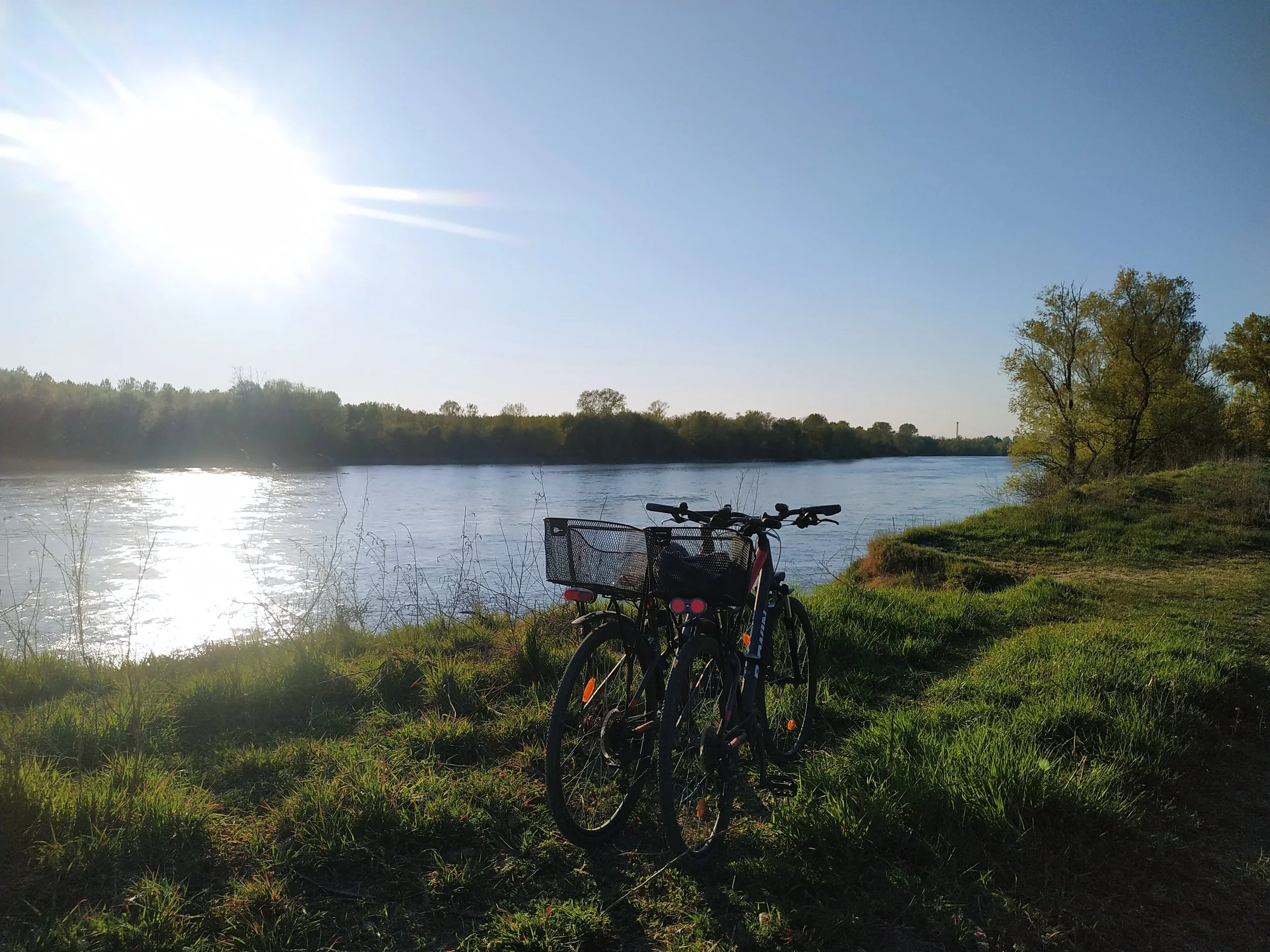
Cycling together is not only sport for us. It is first a journey, then a relationship, then a physical effort, and always a way of entering nature. The order matters.
It teaches us that moving together does not mean becoming identical. It does not mean always wanting the same speed, the same view, the same stop, the same amount of risk. It means staying in conversation with the road, with the body, with the weather, and with each other.
A shared rhythm is not found once; it is adjusted again and again.
That is true on a bicycle. It is true in relationships. And perhaps it is true in most meaningful forms of practice.
Try it yourself. Plan a route with someone you love. Leave space for the unclear parts. Notice the pace between you. Listen to the wind, the music, the body, and each other.
That is where mindfulness can begin — not only in stillness, but in motion.
