

Before I Understood Yoga, My Body Did
The first time I tried yoga, I was living in Lisbon.
I had arrived there for the first stage of my doctoral research, full of plans, books, questions, and the kind of seriousness that makes a person believe every hour should somehow be useful. I was also becoming increasingly interested in baking bread and making pizza, which is one of the more pleasant ways to discover that the body has opinions about one’s lifestyle.
I am tall, so at first it was not dramatic. But a belly had appeared. A small but undeniable one. A soft piece of evidence that flour, time, and enthusiasm had been working together.
To be fair, I was walking a lot. I was living in Santos, a neighborhood close to the river, with small streets, old buildings, cafés, glimpses of water, and the feeling of being slightly outside the busiest center while still close enough to walk into it. I was not especially impressed by Lisbon’s public transportation at the time, so many of the apartments and interviews I visited for my research, I reached on foot. I walked across neighborhoods, up and down hills, through heat, light, tiled buildings, narrow streets, and the particular beauty of a city that always seems to be leaning toward the river.
Still, the walking did not feel like enough.
I wanted to do something else. Something physical. I had played basketball before, but I could not find a convenient court or regular group near where I lived. Gyms had always bored me. I did not want machines, mirrors, and repetition under fluorescent lights.
So I looked for something nearby.
It could just as easily have been Pilates.
At the time, yoga and Pilates lived in the same mental drawer for me: structured movement, probably good for the body, slightly mysterious, not entirely my world. I still do not really know what Pilates is. I chose yoga, I think, because I sensed there was some philosophical idea behind the movement. Also, for reasons I cannot fully reconstruct, I believed Pilates was more for flexibility, and yoga perhaps had something else inside it.
That was the full depth of my analysis.
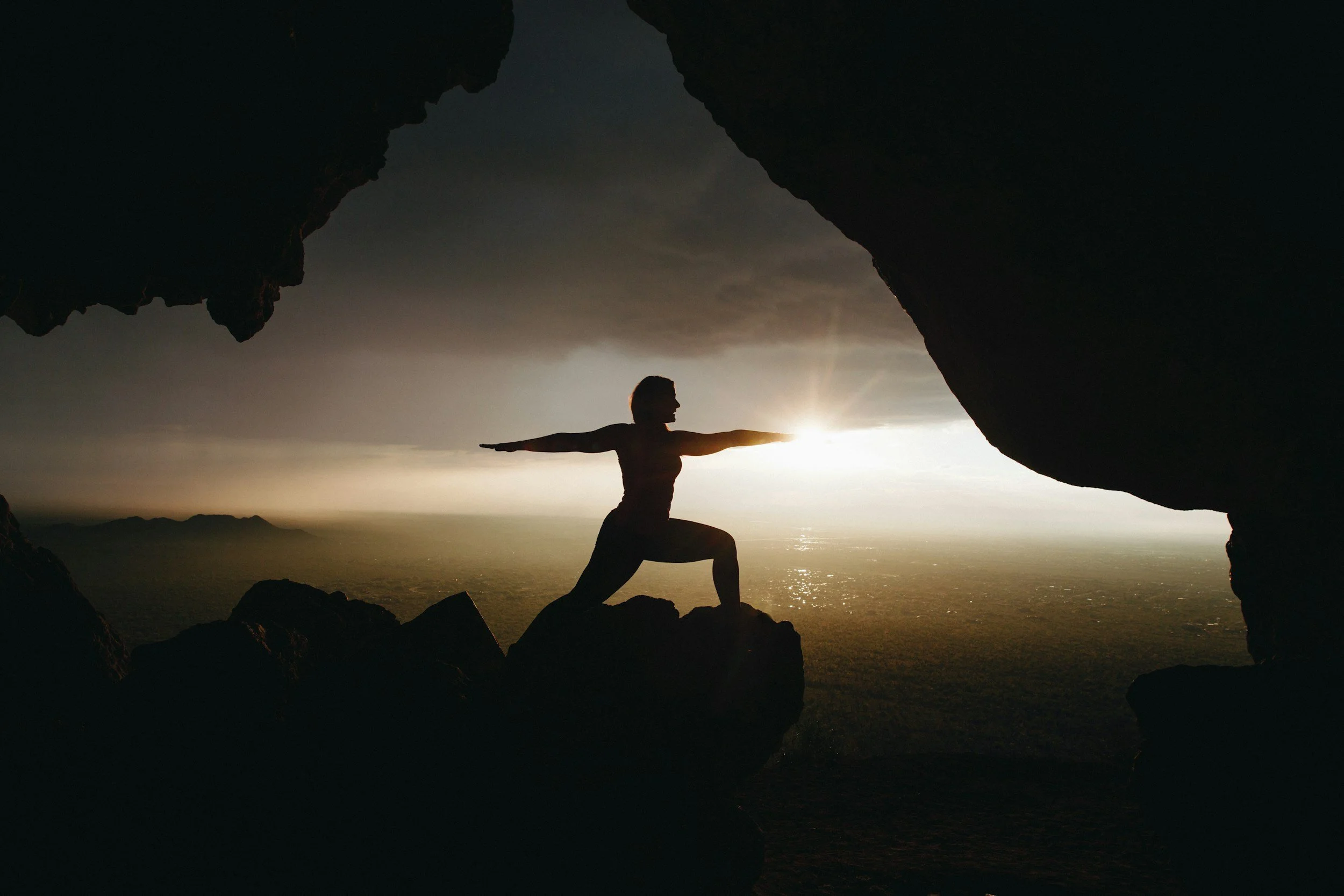
And so a private ritual began.
My girlfriend at the time was not interested in joining, so I went alone. I would leave Santos and walk for about forty minutes to the studio, listening to music in my headphones and enjoying the long transition. That walk became part of the practice before I knew enough to call it that. The class did not begin when I entered the studio. It began when I left the apartment.
The studio was wonderful.
I remember being surprised by how much attention the teachers gave me. They helped me understand where my feet should go, how to move my hips, what to do with my hands, how not to collapse entirely in poses that everyone else seemed to inhabit more naturally. They explained a lot. They were generous, precise, and patient.
But I now understand that, at the time, I was mostly available only for the physical instructions.
Anything that was not directly about the body — anything about attention, breathing, presence, inner experience — passed through me without landing. I heard the words, perhaps. I did not receive them. They did not change my understanding of what I was doing.
I was not mindful. I was sweaty.
Very sweaty.So sweaty, in fact, that at some point I stopped wearing my glasses during class.
At first, this was mostly practical. The glasses slipped, fogged, and became one more thing to manage while I was already trying to understand where to place my hands, feet, hips, and breath. Taking them off made the practice simpler.
But it also changed the room.
Without my glasses, the world around me softened. I could still see (barely) enough to follow the teacher, but not enough to become too occupied with everyone else. The edges blurred. Details disappeared. Faces, bodies, small movements across the room — all of it became less available.
At the time, I did not think of this as mindfulness.
But something important was happening.
The reduced vision made it easier to stay with my own body. It also helped in another way. I was often the only man in a room of women, and I was aware of that. Not wearing my glasses allowed me to feel less caught in the social awkwardness of that situation. I was not looking around. In a very literal sense, I could not.
The practice became more private inside a shared room.
But the classes did not help me lose weight, partly because of what happened after them.
After yoga, I often walked to one of the tourist places overlooking the river and ate a warm waffle. This may not have been the ideal nutritional strategy. But it was a beautiful one.
I would sit there after class, tired and softened, eating something sweet, looking at the water. The intensity of the class was always followed by a strange quiet. I did not yet have language for that transition: from effort to rest, from heat to stillness, from trying to simply being still for a moment.
Then I would put my headphones back on, sit on the steps facing the river, take out my tablet, and read.
In those days, I did not allow myself to read novels. There was always a methodology book, an article someone had sent me, something connected to my doctorate, something I believed I should be reading. Leisure had to justify itself by becoming research.
But looking back, those moments by the river were doing something I did not understand.
I can see now how attention moved in me. Some days, the text pulled me in completely. Other days, the river kept calling me back. Sometimes I was absorbed in the screen; sometimes I returned to the water, the light, the bodies moving around me, the feeling in my legs after practice. The events of the day, the mood of the week, my interest in the text, my fatigue, my solitude, my curiosity — all of it shaped that delicate movement between absorption and return.
It was a kind of pendulum.
Screen. Water.
Thought. Body.
Work. World.
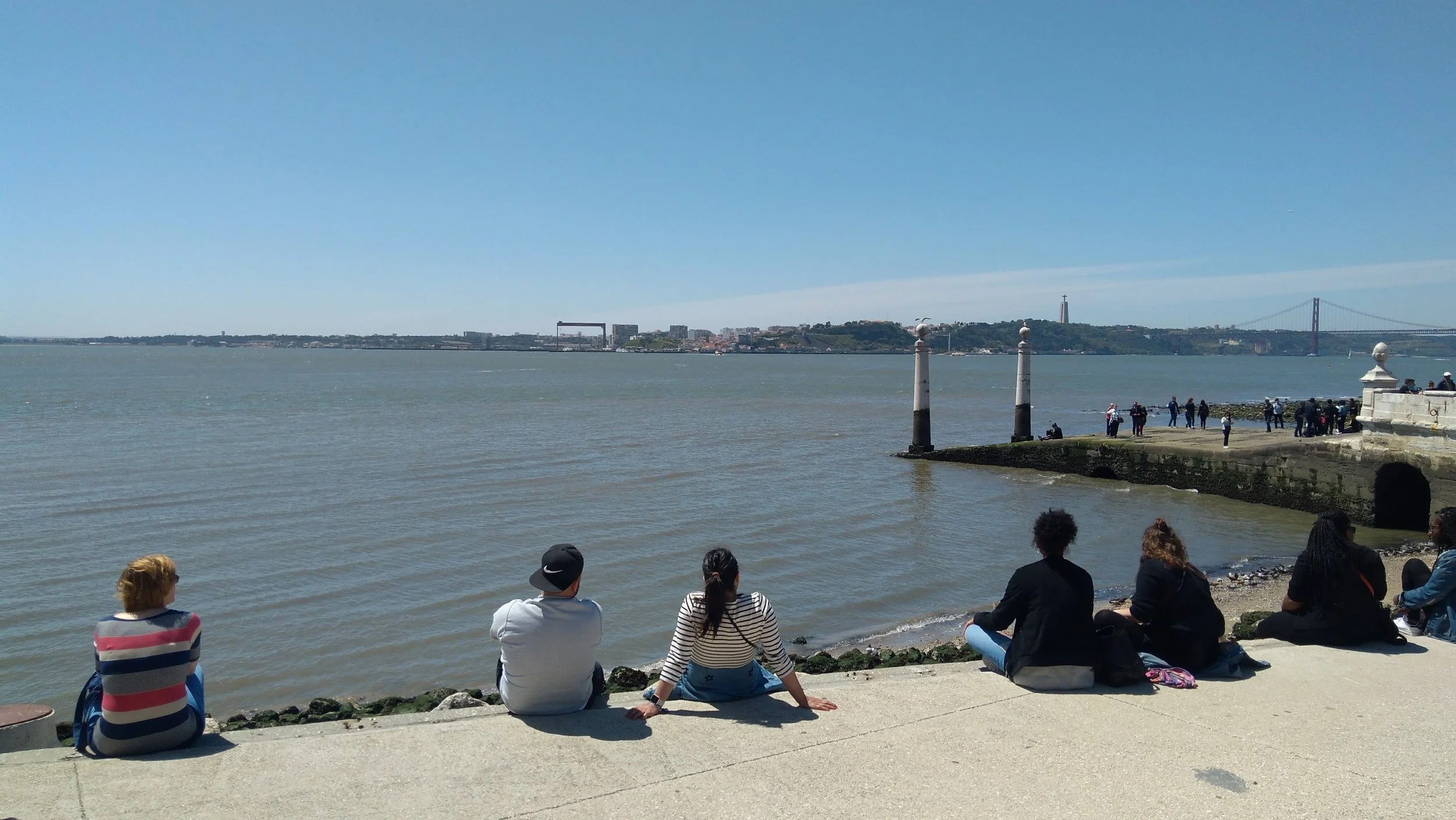
I did not know it then, but yoga had already given me something more than exercise. It had created a small clearing in the day. A different rhythm. A little space in which I could notice, even if I did not yet know that noticing was the point.
Years later, when I read Emmanuel Carrère’s Yoga, I recognized something I could not have named in Lisbon.
It is probably not the book I would give someone to persuade them to begin practicing yoga. For someone who does not practice, it may be a strange entrance: too restless, too wounded, too full of crisis, ego, writing, death, rebirth, and the world beyond the mat.
But for someone who does practice, the book can be deeply moving.
Carrère does not present yoga as a clean escape from life. Practice appears inside life: inside repetition, collapse, longing, failure, and return. Even when he writes about death and rebirth, or about young migrants and displacement, the deeper thread is the same: yoga is not a separate, pure space outside the world. It is something that meets the world with you.
That helped me understand, much later, what those early Lisbon classes had begun to give me. Not serenity. Not transformation. Not even mindfulness, at least not in any conscious way. A relationship with practice.
In Lisbon, I understood none of this.
I was not thinking about practice, values, breath, or the relationship between movement and attention. I was trying to follow instructions, survive the class, and perhaps reduce the consequences of too much bread and pizza.
Still, when it was time to leave Lisbon for the next stage of my research — Jerusalem, this time alone — I left that studio with the feeling that I had acquired something important.
I could not have explained what it was.
That came later.
In Jerusalem, I met Chaya. When she later joined me back in Italy, I discovered that she had a much longer history with yoga than I did. She had met it several times throughout her life, in different periods and different forms. Slowly, gradually, yoga began to enter our shared life.
But by then, it was no longer mainly about the body.
Or rather, it was about the body in a way I had not understood before.
Only later, when Chaya and I began practicing yoga more seriously together, did I understand how important that small habit of taking off the glasses had been.
Taking off my glasses was no longer only about sweat.
It became a way of noticing the difference between external orientation and internal attention. With my glasses on, the world easily pulled me outward: the screen, the teacher, the room, other bodies, small corrections, comparison, movement around me. Without them, the outside world did not disappear, but it lost some of its authority.
That made another kind of attention easier.
I could feel the difference between looking at a screen and scanning the body. Between following an external image and sensing an internal one. Between checking whether I was doing something correctly and asking what was actually happening in my shoulders, breath, jaw, hips, back, or feet.
The blurred room became part of the practice.
It taught me that sometimes attention is not strengthened by adding more information, but by removing some of it.
Over time, this became useful beyond yoga too. I began to notice that I could sometimes take my glasses off in ordinary moments as well — during a quiet evening at home, for example, when I did not need to read the news, solve anything, or keep scanning the world.
Not while driving, of course.
But in small safe moments, the gesture became familiar: less visual demand, more contact with the body, more permission to let the world soften.
There is a useful parallel here with Acceptance and Commitment Therapy, or ACT. In ACT, you do not practice acceptance, defusion, or values-based action because they promise to eliminate anxiety or painful thoughts. That is not the contract. The point is to become less governed by those experiences, and more able to move toward what matters.
Relief may come.
Calm may come.
But those are bonuses, not the reason.
Yoga, for us, became similar.
We do not practice because it guarantees a particular feeling. We practice because it reliably brings us back into relationship with ourselves. The mindfulness is a bonus. The breathing is a bonus. The strength, flexibility, and care for the body are bonuses too. Important bonuses, but hardly a reason no more.
In those early Lisbon classes, I was nowhere near connecting movement and breath. I did not know what that meant. If a teacher said to inhale while preparing for a movement and exhale while entering it, I may have heard the instruction, but I did not yet experience its pleasure.
Years later, during the Covid period in Italy, we had time.
Like many people, we were suddenly inside a strange suspension of ordinary life. We practiced at home, at our own pace, without too much explanation. We repeated. We returned. We learned less through ideas and more through the body’s own slow intelligence.
Gradually, the body began to understand yoga by itself.
Not all at once. Not dramatically. But through repetition, through mornings and evenings, through days when we wanted to practice and days when we did not, through stiffness, irritation, calm, impatience, laughter, and the ordinary discipline of returning.
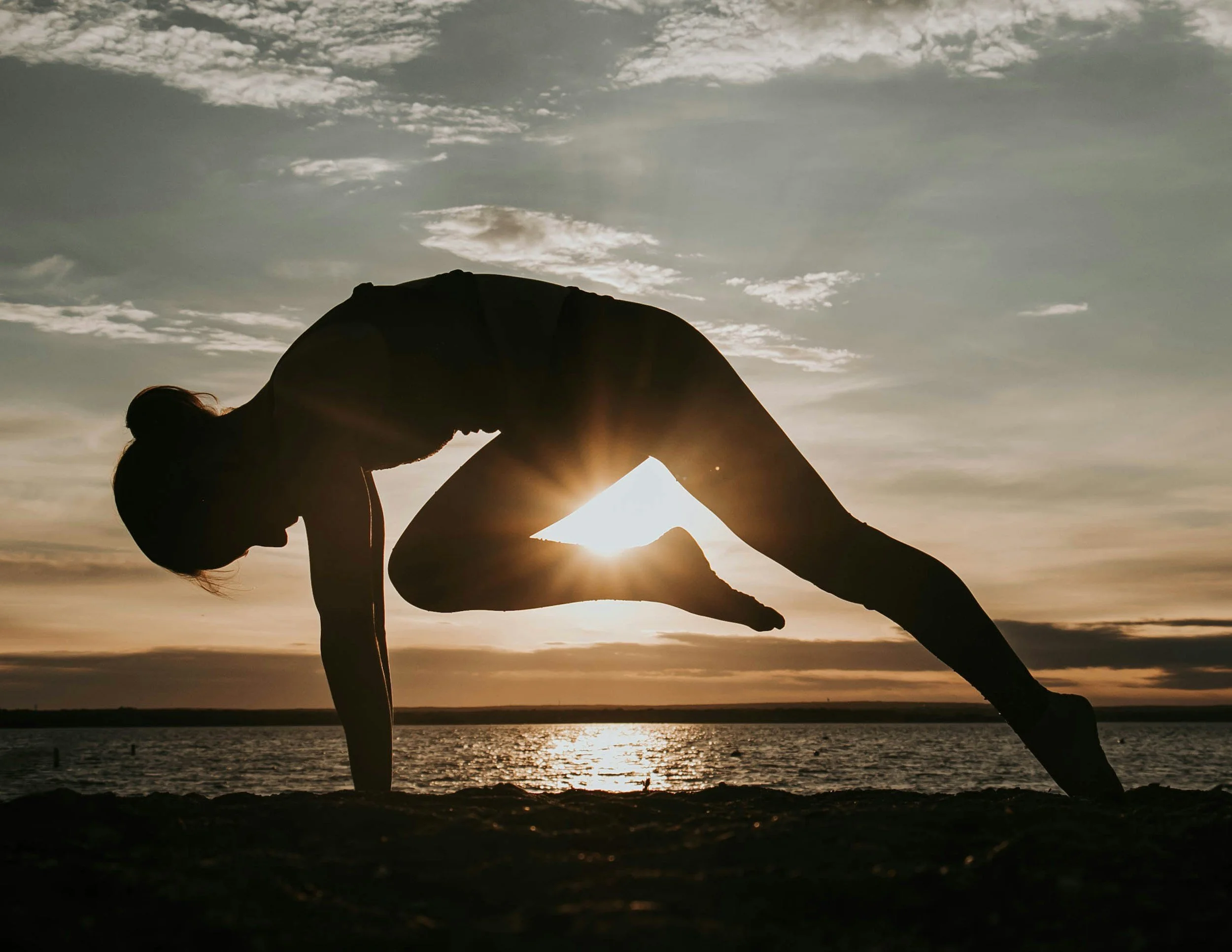
Today, a day without yoga feels a little like a day without a shower.
And if there can be two showers, even better.
That may sound like a joke, and it partly is. But only partly. Yoga has become one of the ways we clean the channel between ourselves and ourselves. It is also one of the ways we communicate with each other. Not always in words. Sometimes by sharing a mat, a room, a rhythm, a tired morning, a small discipline.
There are many profound things one can say about yoga. There are traditions, philosophies, lineages, debates, and beautiful forms of knowledge that deserve respect. But there is also this very simple thing: the pleasure of finishing an inhale as the body prepares to move, and entering the movement on an exhale.
It is one of life’s small joys.
I did not know that in Lisbon.
Back then, yoga was a practical solution to a practical problem. I wanted to move more. I was bored by gyms. I could not find basketball. I had been eating too much pizza. So I walked to a studio, sweated through classes I barely understood, ate waffles by the river, and read academic texts while the water quietly competed for my attention.
That was enough.
Years later, after Lisbon had become a place we returned to rather than the place where I lived, I took Chaya on that same walk.
We started from Santos, from the area that had once been my daily starting point, and walked the old route toward the center. We passed the river, the streets, the turns that my body still seemed to remember. I showed her where I used to go after class, where I ate the waffles, where I sat with my tablet and tried to read serious things while the water kept inviting me elsewhere.
Then we reached the street of the studio.
The name was still there, proudly displayed on the building. I still receive their monthly newsletter, which always makes me smile: a small thread from a former life, arriving quietly in the inbox.
Standing there with Chaya, I could feel the distance between the yoga I had entered then and the yoga that lives with us now. At the beginning, I did not know what I was receiving. I only knew that I liked the walk, the room, the effort, the sweat, the waffle, the river, and the strange calm that followed. Years later, I could see the place of that studio more clearly: small, ordinary, and deeply important.
It had given me a beginning.
Sometimes the body begins before the mind catches up.
Sometimes we practice for one reason, and the practice slowly reveals another.
Try it and see.
